A wheelchair accessible safari in Kenya is possible for Australians with limited mobility when the vehicle, lodges, and transfers are planned specifically for the individual. The right choices make the Masai Mara, Lake Nakuru, and Nairobi National Park accessible. This outcome requires adapted Land Cruisers, carefully vetted lodges, and fly-in options for more remote parks. This guide provides realistic, practical information to help you organise a safe and memorable Kenyan adventure, detailing vehicle adaptations, suitable parks, and travel insurance intricacies.
How Australians find Wheelchair accessible safari vehicles in Kenya
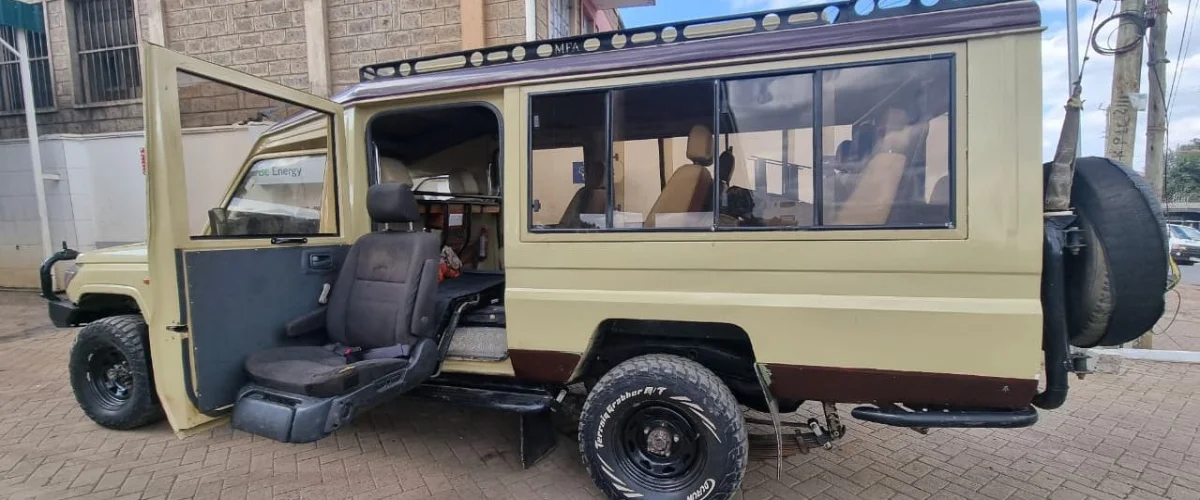
The vehicle is the cornerstone of an accessible safari. The standard vehicle in Kenya is the 4x4 Toyota Land Cruiser, with some models modified for travellers with limited mobility. Fully hydraulic-lift equipped vehicles are extremely rare in Kenya.
Common adaptations include a swivel seat at the passenger door that can be manually positioned for transfers. Other modifications are widened doors to assist with moving from a wheelchair to a car seat. Game viewing happens from a standard seat inside the vehicle, with visibility through large windows and the open pop-up roof.
A safari specialist must verify the exact vehicle for your booking because the term 'accessible' is interpreted differently. You should always request recent, dated photographs and a video of the specific vehicle you will use before booking. Ask for measurements of the door opening and the seat height from the ground to confirm that any transfers are manageable. A reputable operator will have these details or will get them from their ground team in Kenya.
Understanding Accessible Vehicle Availability and Cost
Genuinely adapted safari vehicles in Kenya have very limited availability for Australian travellers. Models with mechanical lifts or advanced swivel-seat systems are not standard fleet vehicles and are owned by a small number of specialised providers. This scarcity makes booking 9 to 12 months or more in advance necessary to secure one.
Limited availability also affects the cost. Securing an adapted vehicle incurs a significant premium over the price of a standard Land Cruiser due to customisation and low supply. This extra expense should be factored into your budget from the outset. Your safari operator can provide a clear breakdown of this cost, which covers the vehicle and the specially trained driver-guide.
Which Kenyan national parks are most suitable for wheelchair users?
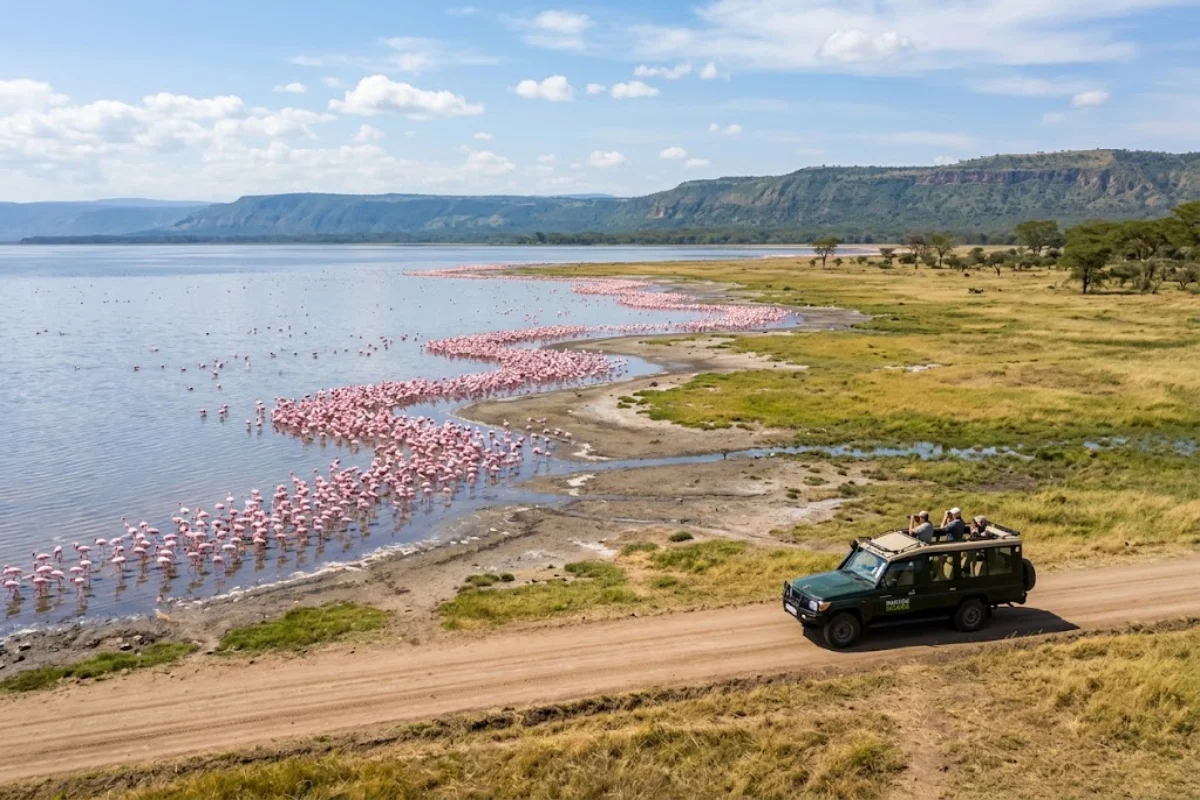
Choosing the right parks is as important as choosing the right vehicle. A park's suitability for a wheelchair accessible safari in Kenya depends on its terrain, internal road network quality, and proximity to accessible accommodation. Some parks present fewer navigational challenges than others.
Nairobi National Park is an excellent starting point. Its location just outside the city means no long, bumpy transfer drives. The park's internal road network is relatively well-maintained and the terrain is largely flat, allowing for a rewarding game drive within a few hours.
Lake Nakuru National Park is another strong choice. The park is compact, and the main tracks around the lake are generally smooth, which makes for a less jarring ride. Shorter game drive loops provide great wildlife viewing, including rhinos and flamingos, without the physical strain of an all-day excursion.
A fly-in safari is the most comfortable option for iconic destinations like the Masai Mara or Amboseli. Flying directly to an airstrip inside or near the reserve bypasses hours of travel on rough, unpaved roads. The game drives from your lodge will still be on bush tracks, but the open, flat terrain in many parts of the Mara and Amboseli provides a more manageable experience.
What accessibility features do Kenyan lodges and camps offer disabled Australian travellers?
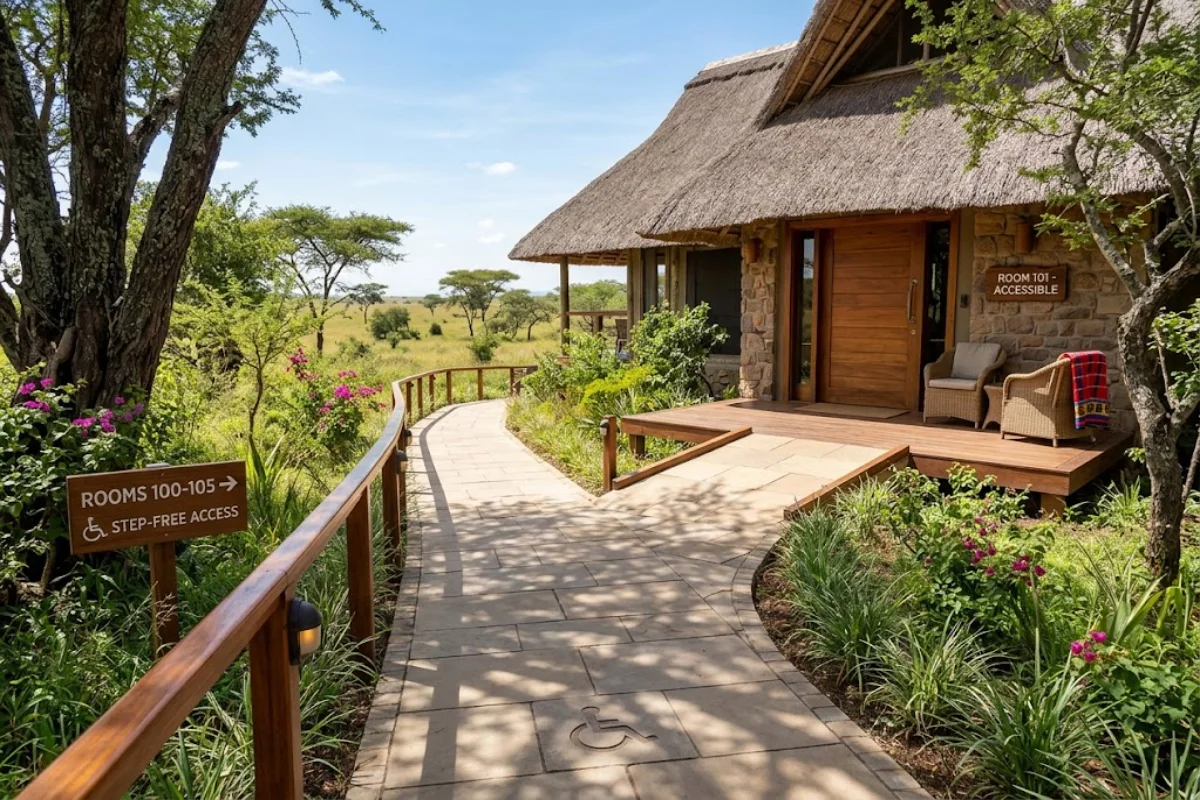
Accommodation is a critical planning component for an accessible safari. The terms ‘wheelchair friendly’ and ‘fully accessible’ can mean very different things in a safari context. You must ask direct and specific questions to ensure a lodge meets your personal requirements.
Many properties are constructed on uneven ground. A lodge may have an accessible room, but the pathways connecting it to the main dining and lounge areas can be steep, gravelly, or have steps. Do not settle for a simple "yes" to an accessibility query. Ask for specifics, including current photos and measurements. Create a checklist of your needs for your safari operator to verify.
Lodge Accessibility Checklist
- Pathways: Are the paths to the room and main areas paved, smooth, and step-free? Are they compressed gravel or loose sand?
- Room Access: Is there a ramp into the room? What is the width of the main doorway and the bathroom door?
- Bathroom: Does the bathroom have a roll-in shower with a seat? Are there grab rails for the toilet and shower? What is the height of the toilet and the bed?
- Distances: How far is the room from the restaurant and reception? These distances can sometimes be considerable.
- Staff Assistance: Are staff available to escort you along paths, especially at night?
Sarova Mara Game Camp is one property known to have invested in accessibility with specific adapted rooms. However, you must always verify the current state of these facilities directly with the lodge via your tour operator before confirming any booking.
Pros and cons of fly-in vs road safaris for Australians with mobility issues
The decision between driving and flying between parks affects your comfort and the overall pace of your safari. A road safari allows you to travel in the same adapted vehicle for your entire trip, which provides consistency. The journeys between parks, however, can be long, often on roads that are bumpy and fatiguing.
A fly-in safari significantly reduces travel time and physical discomfort. A flight from Nairobi to the Masai Mara takes about an hour, compared to a 5-6 hour drive that includes rough sections. This method preserves your energy for game drives. Bush flights present their own challenges, as the aircraft are small, like Cessna Caravans, and boarding is via a few steep steps. Bush airstrips do not have air bridges or mechanical lifts. You must be able to manage these steps with assistance from the pilot and crew. Luggage is also strictly limited to 15 kg per person in soft-sided bags.
How do you navigate Kenyan airport assistance and bush flights with a wheelchair?
Navigating Kenyan airports requires proactive planning. You or your travel agent must pre-book wheelchair assistance with your airline well in advance for your arrival at Nairobi’s Jomo Kenyatta International Airport (JKIA). After confirmation, the airline coordinates with Kenya Airports Authority (KAA) ground handlers to ensure staff are ready to assist you from the aircraft through immigration and baggage claim.
The process for domestic flights from Wilson Airport, the hub for most safari flights, is similar but smaller in scale. You must inform the domestic airline, such as Safarilink or AirKenya, of your specific needs at the time of booking. The aircraft are small, and boarding is a manual process. Staff are generally very helpful and will provide physical assistance up the aircraft steps. Travelling with a lightweight, collapsible manual wheelchair is often easiest, as some larger or motorised chairs may not fit in the aircraft's hold. You must discuss the dimensions and weight of your wheelchair with the airline beforehand to confirm transport.
What specific travel insurance covers Australians on a Kenyan accessible safari?
Selecting the right travel insurance is a non-negotiable part of planning for Australian travellers with pre-existing medical conditions or mobility issues. You must declare every pre-existing condition to the insurer during the application process. Failure to do so can void your policy. This declaration will likely increase your premium but ensures you are covered if a related issue arises.
Many Australian insurers have age limits, with policies becoming more expensive for travellers over 70 or 80. You should compare providers that specialise in senior travel. Ensure any policy provides comprehensive cover for overseas medical expenses, emergency medical evacuation, and personal liability. The Australian Government's Smartraveller website advises a medical evacuation from Kenya could cost over $100,000, so your policy's limit must be sufficient. We recommend a policy that includes AMREF Flying Doctors for rapid aeromedical evacuation from remote bush locations to Nairobi.
Kenya's planned mandatory travel insurance for Australian visitors
The Kenyan government has announced plans to implement mandatory travel insurance for all international visitors. This policy will cover emergency medical costs within the country. The precise regulations, including minimum coverage amounts and the implementation date, are still being finalised. Travellers should monitor for updates as their trip approaches. This policy is expected to be administered via the Electronic Travel Authorisation (eTA) system that Australians use to enter Kenya.
This local cover is not a substitute for your comprehensive Australian travel insurance policy. The Kenyan policy is designed for emergency medical treatment within Kenya. Your Australian policy provides broader protection, including medical evacuation back to Australia, cancellation costs, and personal liability. You must verify the latest requirements for the mandatory cover and purchase it if required, in addition to your own comprehensive policy.
How do you craft a tailored accessible safari itinerary from Australia?
A successful accessible safari is meticulously built around your specific abilities, pace, and interests, not an off-the-shelf product. Open and detailed communication with your safari specialist is the most important step. Be explicit about what you can and cannot do, including transfer abilities, how long you can sit comfortably, and any medical needs.
A good itinerary features shorter drive times between parks and during game drives. Plan for no more than one or two major locations to minimise disruptive transfers. An itinerary should also build in rest days or afternoons at leisure to relax and enjoy the lodge environment. The goal is an enjoyable trip, not an endurance test. A specialist helps you balance iconic wildlife viewing with comfort and safety.
Key Planning Considerations for an Accessible Kenya Safari
| Planning Aspect | Key Consideration | Recommendation |
|---|---|---|
| Safari Vehicle | Adapted 4x4 Land Cruiser (manual assist, not hydraulic lift). | Book 9-12+ months in advance; request dated photos. |
| National Parks | Terrain, road quality, and lodge proximity. | Favour Nairobi NP, Lake Nakuru, or fly-in safaris. |
| Accommodation | Pathways, room access, and bathroom features. | Verify specific room details with photos and measurements. |
| Travel Insurance | Cover for pre-existing conditions and medical evacuation. | Declare all conditions; ensure high evacuation limit. |
What is the pre-travel checklist for Australians with limited mobility?
A thorough pre-travel check ensures a smoother journey. Work through this list to confirm all details are in place for your wheelchair accessible safari in Kenya.
- Medical: Carry a letter from your doctor detailing your condition, medications (with generic names), and necessary equipment. Pack more than enough prescription medication for your trip in your carry-on luggage.
- Mobility Aids: Ensure your wheelchair or other aids are serviced and in good working order. Pack a small toolkit with essential spare parts, such as an inner tube patch kit for tyres.
- Insurance: Double-check that your Australian travel insurance policy is active, covers your declared pre-existing conditions, and has a high limit for medical evacuation. Print a copy of the policy and emergency contact numbers.
- Confirmations: Ask your safari operator to re-confirm all accessible arrangements, including the specific vehicle, your exact room at each lodge, and airport assistance, 72 hours before your departure.
- Documents: Check your passport has at least six months validity. Apply for your Kenyan eTA in advance. Register your travel plans with the Australian government's Smartraveller service.
- Contacts: Save all emergency contacts in your phone and carry a hard copy: your insurer, your safari operator in Kenya, AMREF, and the Australian High Commission in Nairobi.
Organising an accessible safari requires detailed planning and verification of every element. A specialist experienced in mobility challenges will check every vehicle and room before providing a quote, helping you to plan your journey with confidence.