Australia Passenger Movement Charge (PMC) is a proposed A$10 increase, lifting the departure fee from A$70 to A$80 for anyone leaving the country from 1 January 2027. A legislative proposal for this change was before the House of Representatives in late 2026.
For Australian travellers organising a Kenya safari, this change is one of several mandatory costs. Understanding the PMC alongside the Kenya ETA, travel insurance, and seasonal park fees is necessary for accurate financial planning. This is particularly relevant for families travelling during the December 2026 and January 2027 changeover period.
Official Status of the Australia Passenger Movement Charge Increase
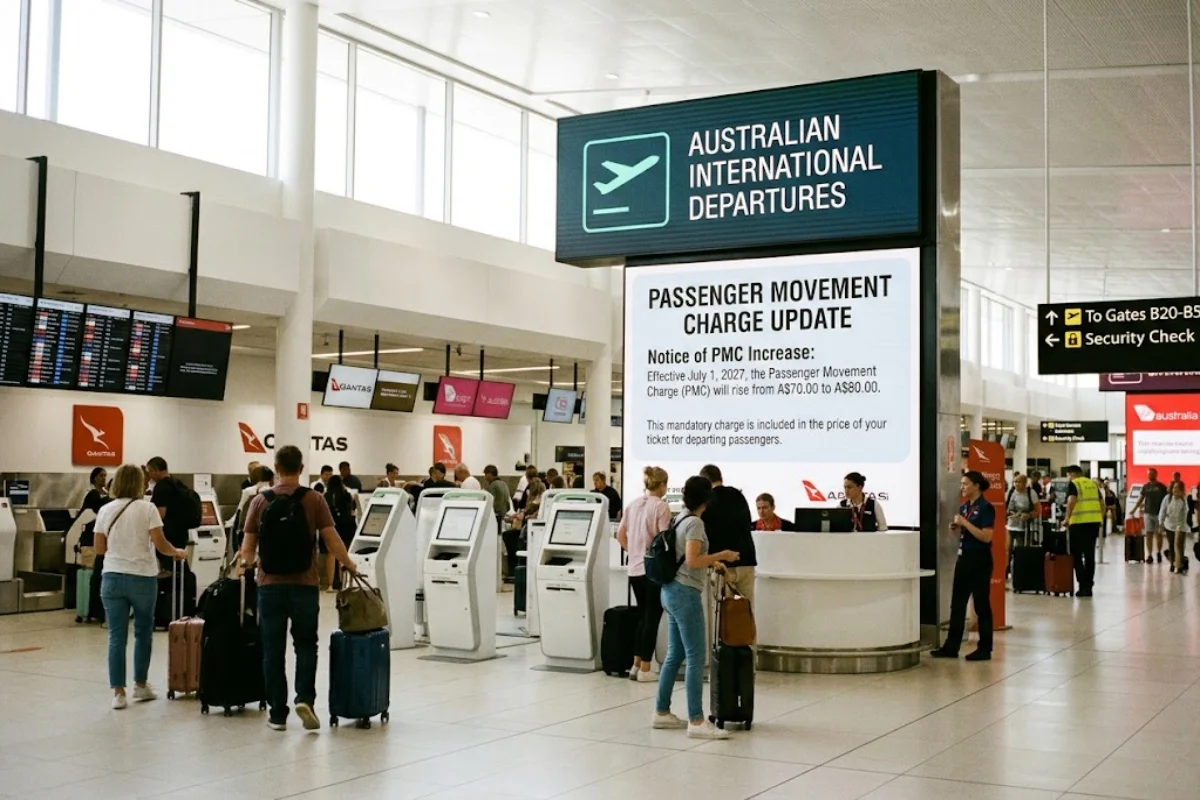
The proposed Passenger Movement Charge (PMC) increase will raise the departure fee for international travel from Australia from A$70 to A$80 per person. This change is scheduled to affect all departures on or after 1 January 2027.
The House of Representatives was reviewing the legislative proposal, the Passenger Movement Charge Amendment Bill 2026, in late 2026. Because its passage is not yet finalised, the A$80 rate remains proposed. Travellers can verify the bill's official status on the Australian Parliament House ParlInfo website.
Who is Exempt from the Australian Passenger Movement Charge?
The Australian Border Force provides exemptions from the Passenger Movement Charge for specific groups. Exemptions apply to children under 12 years of age, flight and ship crew on duty, and transit passengers who depart Australia within 24 hours of arrival without clearing immigration. The exemption for children under 12 provides a direct cost saving for Australian families planning a Kenya safari.
How the Passenger Movement Charge is Paid
The Passenger Movement Charge is not a fee paid separately at the airport. An airline or travel agent automatically includes the PMC in the 'taxes and fees' section of an airfare at the time of purchase. This payment method applies to all non-exempt travellers.
Full Mandatory Costs for a Kenya Safari from Australia

Accurate budgeting for a Kenya safari requires accounting for several mandatory charges beyond the Australian departure fee. These per-person costs include the Kenya Electronic Travel Authorisation (ETA), travel insurance, and daily park fees for reserves like the Masai Mara.
These charges form a significant part of the initial trip cost, especially for family or group travel. Note that fees quoted in US dollars are paid via a method that converts them from Australian dollars at the prevailing rate, meaning the final cost will fluctuate.
| Charge | Description | Approx. Cost (USD) | Approx. Cost (AUD)* |
|---|---|---|---|
| Passenger Movement Charge (PMC) | Australian Government departure charge. Children under 12 are exempt. | N/A | A$70 or A$80 pp |
| Kenya ETA | Mandatory online authorisation for entry. Children under 18 are exempt from the fee but require an ETA lodgement. | US$32.50 pp | A$49 pp |
| Kenya Travel Insurance | A local policy for emergency medical treatment and evacuation may be required. Travellers must verify current rules on official portals. | US$52 pp | A$78 pp |
| Maasai Mara Park Fees (High Season) | Per person, per 24 hours (1 Jul - 31 Dec). Adult and child (3-17 years) rates differ. | US$200 Adult / US$50 Child | A$300 Adult / A$75 Child |
| Maasai Mara Park Fees (Low Season) | Per person, per 24 hours (1 Jan - 30 Jun). Adult and child (3-17 years) rates differ. | US$100 Adult / US$50 Child | A$150 Adult / A$75 Child |
*All AUD conversions are indicative, based on an exchange rate of 1 USD = 1.50 AUD. Rates fluctuate and final costs will vary.
How do Mandatory Safari Costs Compare for Adults and Children?
Mandatory fees for a Kenya safari apply differently across age groups. The Australian Passenger Movement Charge is levied on adults and children aged 12 and over. Children under 12 are exempt from the PMC.
For entry into Kenya, the Electronic Travel Authorisation (ETA) fee of approximately US$32.50 applies to all travellers aged 18 and over. Children under 18 are exempt from the fee, but an application must still be lodged for them.
If a mandatory local travel insurance policy is in effect (approx. US$52), it is typically a per-person cost applied to all travellers, regardless of age. Maasai Mara National Reserve park fees have separate rates for adults and for children aged 3 to 17. These age-based rules affect the total cost for different family compositions.
Why Departure Date Impacts Your Kenya Safari Budget
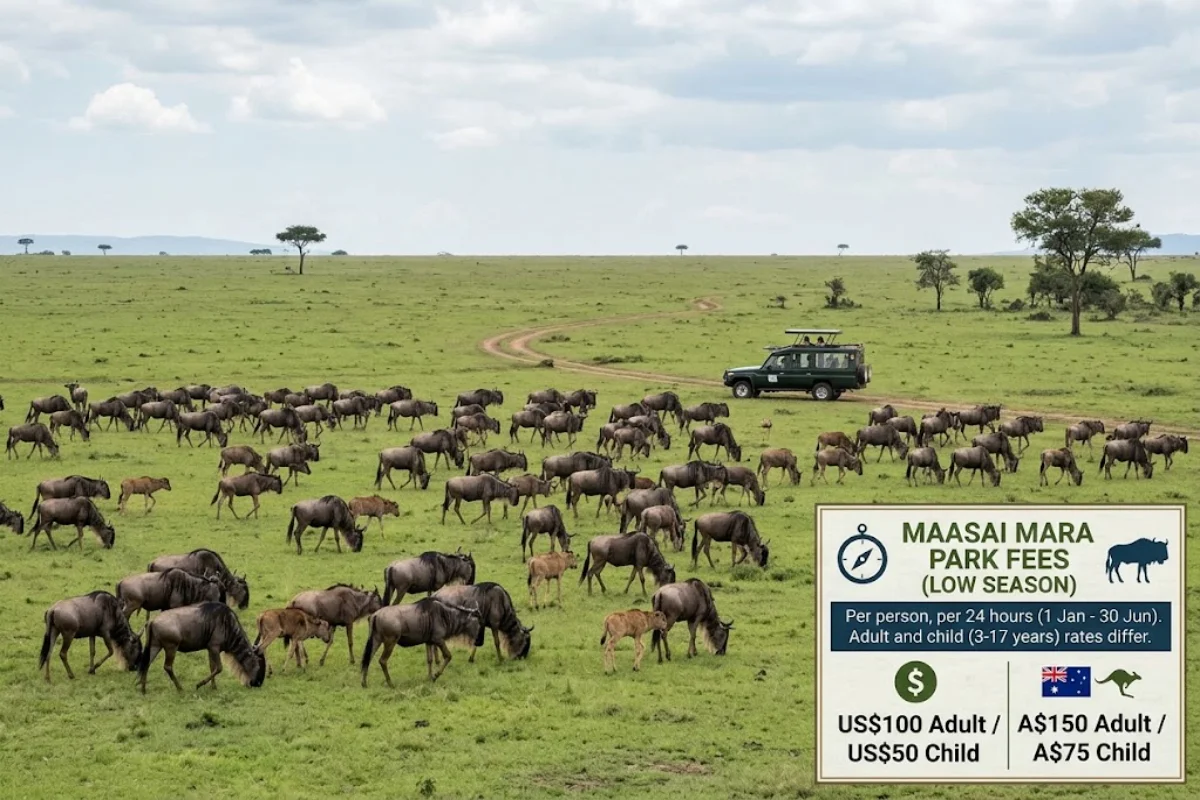
The specific date of your departure from Australia significantly impacts your budget, driven more by Kenyan seasonal park fees than the A$10 PMC increase. The Maasai Mara National Reserve's high-season rates end on 31 December, and low-season rates begin on 1 January. Low-season adult rates are 50% lower.
This seasonal price drop offers a large cost saving that outweighs the small rise in Australia's departure tax. The following table compares total mandatory costs for an Australian family of four (2 adults, one 14-year-old, one 10-year-old) on a three-day Maasai Mara safari, departing in late December versus early January.
| Fee Breakdown (Family of 4) | Departure: 28 Dec 2026 | Departure: 4 Jan 2027 |
|---|---|---|
| Passenger Movement Charge (3 people x A$70 / A$80) |
A$210 | A$240 |
| Kenya ETA (2 adults x A$49) |
A$98 | A$98 |
| Kenya Travel Insurance (4 people x A$78) |
A$312 | A$312 |
| Mara Fees (3 Days, High Season) (2 Ad x A$300 x 3) + (2 Ch x A$75 x 3) |
A$2,250 | - |
| Mara Fees (3 Days, Low Season) (2 Ad x A$150 x 3) + (2 Ch x A$75 x 3) |
- | A$1,350 |
| Total Mandatory Charges | A$2,870 | A$2,000 |
The ledger shows that despite paying an extra A$30 for the PMC increase, the family saves A$900 on park fees by travelling in early January. This results in a net saving of A$870 on these mandatory charges, showing the financial benefit of timing your safari with the low season.
How the Passenger Movement Charge Affects Airfares
The Passenger Movement Charge is applied based on the date of departure, not the date of booking. If you purchase flights in 2026 for travel on or after 1 January 2027, the new A$80 charge will apply. Airlines collect this fee on behalf of the government.
If a government tax increases after a ticket is issued, the airline will typically contact the passenger to collect the difference. You may receive an email requesting payment for the additional A$10 per eligible person. The "Taxes, Fees and Surcharges" section of your e-ticket provides a detailed breakdown of these charges.
How to Plan for Your Kenya Safari Mandatory Costs
Managing the various mandatory costs for a Kenya safari requires careful organisation. This checklist helps ensure you budget correctly and are prepared for a smooth journey.
- Confirm All Fees: Several months before your trip, verify the current rates for the PMC, Kenya ETA, any mandatory insurance, and relevant park fees for your exact travel dates.
- Monitor Official Sources: Check the Australian Parliament's ParlInfo website for the PMC bill's status. Use the official Kenya eCitizen portal for ETA and insurance requirements.
- Budget for Currency Fluctuations: Budget a 5-10% buffer to cover potential adverse exchange rate movements, as many Kenyan fees are set in US dollars.
- Consult a Specialist: A safari specialist booking for Australian clients can manage these details, ensuring your budget is accurate and all documentation is correctly handled.
How a Safari Specialist Helps Australian Travellers

A safari specialist provides current advice on the status of the Passenger Movement Charge, Kenya's ETA, and mandatory insurance policies. Their expertise on the seasonal timing of park fees helps translate these details into an accurate budget for your family holiday or honeymoon.
A specialist handles these administrative complexities, which prevents unexpected costs. Their support ensures your focus remains on the wildlife and landscapes, providing a well-organised safari from start to finish.
[Contact us to plan your Kenya safari]