A Kenya vs Tanzania safari comparison for Australians focuses on flight connections, park fees in AUD, and Great Migration timing. Nairobi in Kenya provides more single-stop flights and shorter travel times from Australia than Tanzania's northern safari circuit. This logistical difference is a primary consideration for Australian travellers.
This 2026 guide details the costs and logistics for an Australian audience. The comparison includes flight access from major cities, total entry costs in Australian dollars, daily park fees, and the month-by-month location of the Great Migration herds. This information supports confident East African safari planning.
Kenya vs Tanzania Safari Flight Comparison from Australia
Kenya is generally more accessible for Australian travellers than Tanzania due to better flight connections. Nairobi's Jomo Kenyatta International Airport (JKIA) serves as a regional hub with frequent single-stop flights from Australia. Reaching Tanzania’s northern safari circuit requires flying into Kilimanjaro International Airport (JRO), which typically involves at least two stops and adds considerable travel time.
| From Australia | To Nairobi, Kenya (NBO) | To Kilimanjaro, Tanzania (JRO) |
|---|---|---|
| Sydney (SYD) | 1 stop (e.g., via Dubai, Doha, Abu Dhabi). ~20-24 hours total travel time. | 2+ stops (e.g., via Dubai & Nairobi, or Doha & Addis Ababa). ~25-30+ hours. |
| Melbourne (MEL) | 1 stop (e.g., via Dubai, Doha, Abu Dhabi). ~21-25 hours total travel time. | 2+ stops (e.g., via Doha & Zanzibar, or Dubai & Addis Ababa). ~26-32+ hours. |
| Perth (PER) | 1 stop (e.g., via Dubai, Doha). Often the fastest route from Australia at ~18-22 hours. | 2+ stops (e.g., via Dubai & Nairobi). ~24-28+ hours. |
| Brisbane (BNE) | 1 stop (e.g., via Dubai, Doha). ~22-26 hours total travel time. | 2+ stops (e.g., via Doha & Nairobi). ~28-34+ hours. |
What are the 2026 safari entry costs in AUD for Australians?
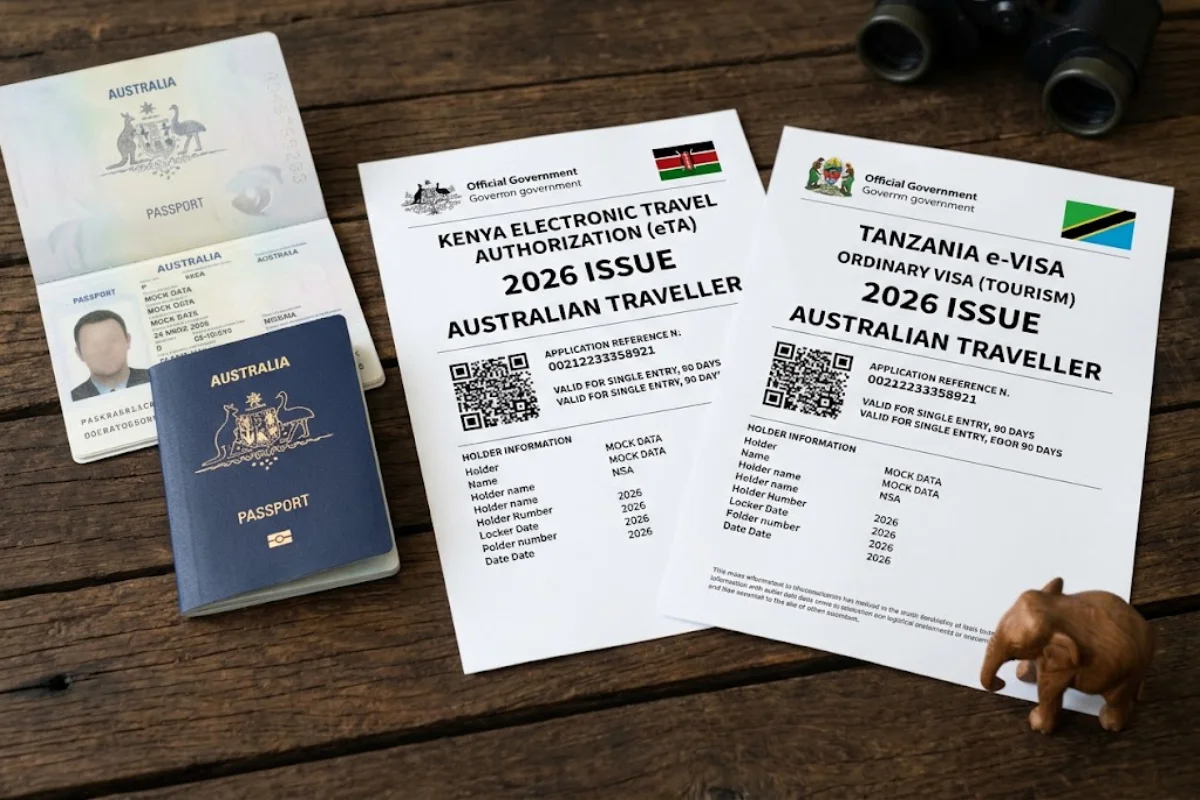
Kenya's 2026 entry requirements for Australians cost approximately A$123 per person, comprising an Electronic Travel Authorisation (ETA) and mandatory insurance. In comparison, Tanzania's e-visa for Australians costs around A$75 per person. Both systems require online application before departure from Australia.
A Yellow Fever vaccination certificate is mandatory for Australian travellers crossing the border between Kenya and Tanzania. This health requirement applies to travel in either direction. The costs provided are estimates based on a 2026 exchange rate of 1 USD = 1.50 AUD and are subject to currency fluctuations.
| Requirement | Kenya | Tanzania |
|---|---|---|
| Entry System | Electronic Travel Authorisation (ETA) | e-Visa |
| Application | Online via the official Government portal. Must be done before travel. | Online via the Tanzania Immigration Services portal. |
| Cost (USD) | ETA: US$30 Mandatory Insurance: ~US$52 |
e-Visa: US$50 |
| Approx. Cost (AUD) | ~A$123 per person (A$45 + A$78) | ~A$75 per person |
| Yellow Fever Certificate | Mandatory if travelling between Kenya and Tanzania. Not required if arriving directly from Australia and only visiting one country. | |
Kenya vs Tanzania Daily park fees comparison in AUD
Daily park fees are a significant component of a safari budget, with Kenya's peak season Masai Mara fees being higher per day than Tanzania's Serengeti fees. These fees, set in USD and charged per person per 24 hours, fund conservation and anti-poaching programmes. Understanding the daily cost in Australian dollars helps with accurate budget planning for a multi-day safari.
Kenya's private conservancy fees differ from national reserve fees. Conservancy fees are usually included in the nightly accommodation rate and provide access to exclusive areas. This pricing model applies to lodges and camps situated within the conservancies bordering the Masai Mara.
| Park / Reserve | Country | Fee per Adult per 24 hours (USD) | Approx. Fee in AUD |
|---|---|---|---|
| Masai Mara National Reserve (Peak: Jul-Dec) | Kenya | US$200 | ~A$300 |
| Masai Mara National Reserve (Low: Jan-Jun) | Kenya | US$100 | ~A$150 |
| Amboseli National Park | Kenya | US$90 | ~A$135 |
| Serengeti National Park | Tanzania | ~US$83 (inc. VAT) | ~A$125 |
| Ngorongoro Conservation Area | Tanzania | ~US$83 (inc. VAT) + vehicle fee | ~A$125 + vehicle fee |
Which country is best for the Great Migration each month?
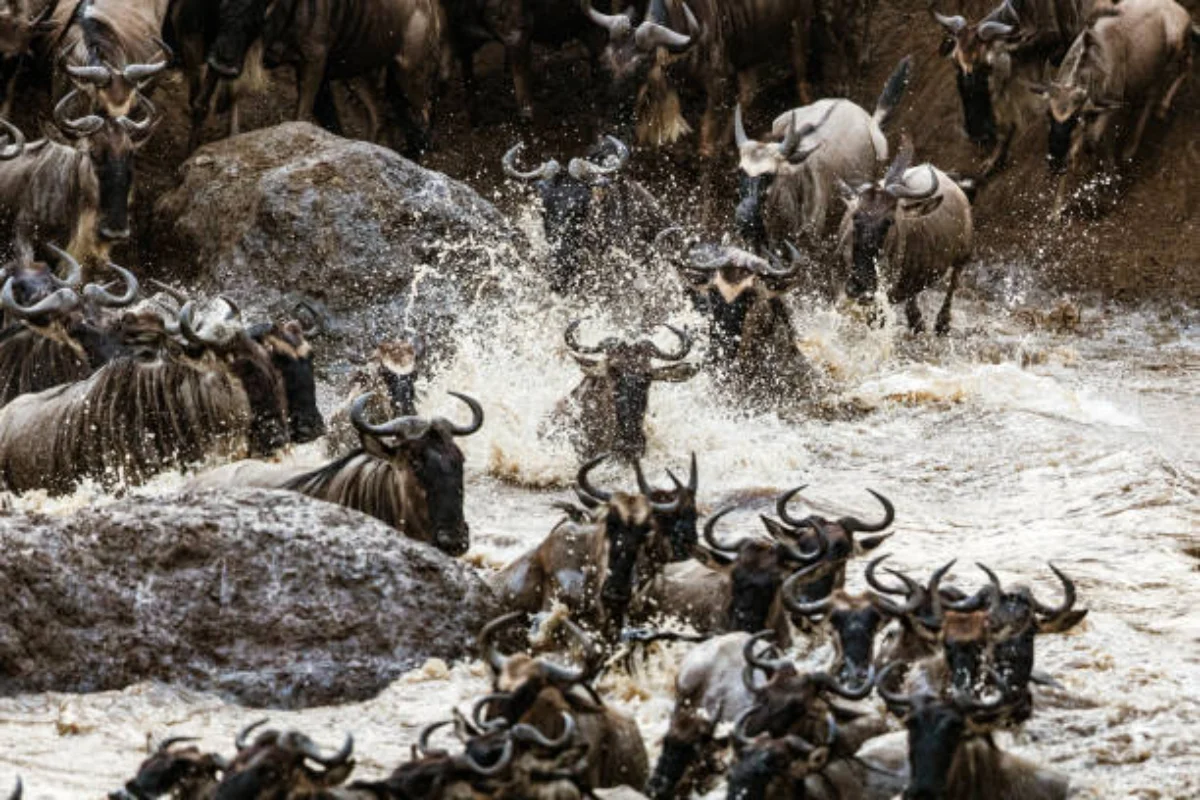
The Great Wildebeest Migration is a continuous, year-long cycle of over 1.5 million animals moving between Tanzania's Serengeti and Kenya's Masai Mara. The herds follow rainfall patterns in search of fresh grazing, and your travel dates determine which country offers the primary viewing location. These migratory patterns are typical but can vary annually based on weather conditions.
For a detailed look at planning your travel around this event, see our guide to migration safaris for Australians.
| Month | Location of Herds | Country | Key Spectacle |
|---|---|---|---|
| Jan - Mar | Southern Serengeti / Ndutu | Tanzania | Calving season. Hundreds of thousands of calves are born. Prime predator action. |
| Apr - May | Central to Western Serengeti | Tanzania | Herds move north. The 'long rains' can make travel challenging. |
| June | Western Serengeti / Grumeti River | Tanzania | First major river crossing at the Grumeti River. |
| July - Oct | Northern Serengeti & Masai Mara | Tanzania & Kenya | The famous Mara River crossings. Herds are in both countries. Prime viewing season. |
| November | Northern to Central Serengeti | Tanzania | Herds move south from the Mara with the 'short rains'. |
| December | Southern Serengeti | Tanzania | Herds arrive back on the southern plains to graze in preparation for calving. |
Difference between a safari in Kenya and Tanzania
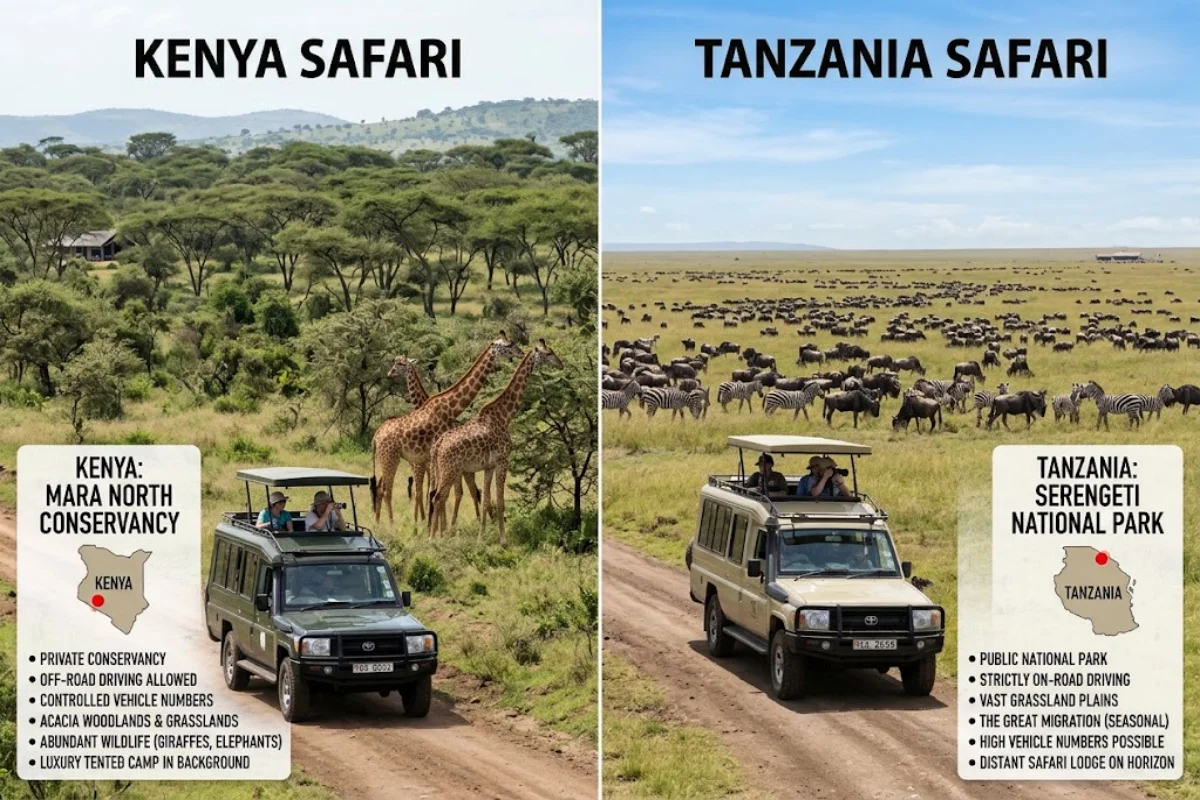
The safari style differs significantly between Kenya's private conservancies and Tanzania's large national parks. Tanzania's national parks, like the Serengeti, offer an experience of immense, unfenced wilderness. Activities within these parks are strictly regulated to protect the environment, requiring vehicles to stay on designated roads and limiting game drives to daylight hours.
Kenya's safari model combines national reserves with adjacent private conservancies for a more exclusive and flexible experience. These conservancies, leased from Maasai communities, limit vehicle numbers and accommodation density, resulting in a less crowded viewing environment. Private conservancies permit activities not allowed in national parks, including off-road driving, guided bush walks, and night game drives.
How Australians combine a Kenya and Tanzania safari
A combined Kenya and Tanzania safari requires careful logistical planning. Travellers can cross between the two countries by road or with a regional flight. The main road crossing for safari circuits is Isebania, which connects the Serengeti and Masai Mara and typically requires a vehicle and driver change at the border.
Key practicalities for a combined safari include:
- Entry Requirements: You must secure the correct entry documents for both countries, which are the Kenya ETA and the Tanzania e-visa.
- Yellow Fever: A Yellow Fever vaccination certificate is mandatory when travelling between Kenya and Tanzania in either direction.
- Flights: Small bush planes connect the Masai Mara to the Serengeti, though this is a more expensive option than a road transfer.
- JKIA Screening: Nairobi's JKIA airport directs passengers arriving from Tanzania through a health screening. This standard procedure can add time, which you should factor into your transit schedule.
Which safari is better for Australian families, honeymooners, and budgets?
The ideal destination depends on your specific travel style and priorities. Both Kenya and Tanzania are safe destinations for organised safaris, allowing your decision to be based on the experience you are looking for.
- Families: Kenya is often better suited for family safaris. Many lodges in its private conservancies offer family suites and specific activities for children, such as Maasai warrior training and guided nature walks. Shorter driving distances between Kenyan parks are another advantage.
- Honeymooners: Both destinations provide romantic settings. Kenya's private conservancies offer seclusion with small, luxury camps ideal for private dinners. Tanzania provides dramatic scale in the Serengeti and Ngorongoro Crater, with remote high-end lodges.
- Budgets: Kenya generally offers more flexibility for different budgets. Its wider variety of accommodation, from adventure camping to mid-range lodges, can help offset high peak-season park fees. Tanzania's northern circuit is typically positioned as a more premium destination.
How to decide between a Kenya and Tanzania safari
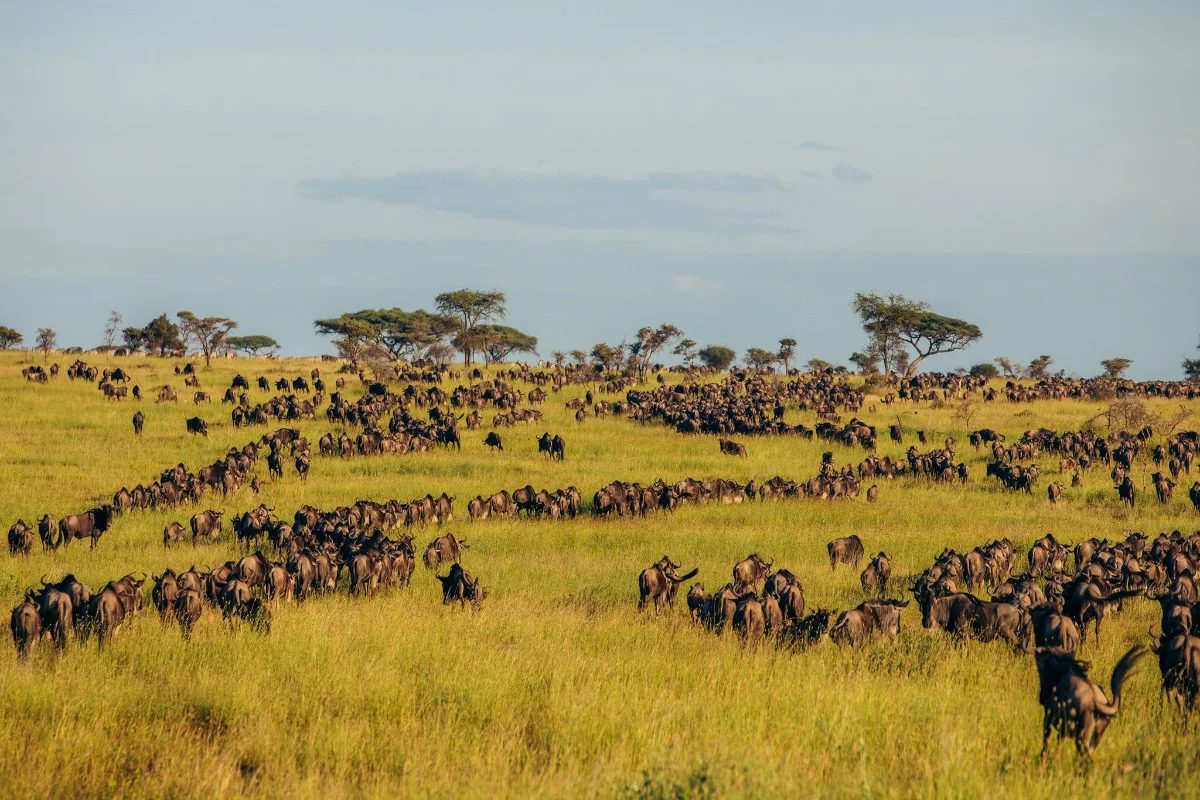
The decision between a Kenya and Tanzania safari for an Australian traveller depends on three main factors: your travel timing, your budget, and your preferred safari style. Your travel dates determine the best location to see the Great Migration; plan for Kenya from July to October for river crossings or Tanzania from January to March for the calving season.
Your budget is the second factor, balancing flight costs against park fees. Kenya is easier to fly to from Australia, but its peak-season park fees are higher than Tanzania's. Your preferred safari style is the third consideration. Choose Kenya for exclusive activities in private conservancies or Tanzania for the classic wilderness experience in its large national parks.
How to get expert safari guidance for Australian travellers
Planning a safari from Australia involves complex flight logistics and seasonal considerations that can feel overwhelming. An East Africa travel specialist with experience in the Australian market can help organise these details for a successful trip.
Travellers comparing Kenya and Tanzania can request a personalised, obligation-free itinerary. A well-designed itinerary will match your travel dates, budget, and safari preferences. This is the final step in planning your East African safari.