Malaria tablets for a safari are recommended for Australians because malaria is widespread across Kenya's safari parks and coastal regions. This guide clarifies malaria risk zones in popular destinations and simplifies the types of medication available via prescription in Australia. Assessing your itinerary is the first step to understanding your personal malaria risk.
This article provides informational guidance and is not a substitute for professional medical advice. Australians must consult a GP or travel doctor for advice based on their health history and travel plans. You should organise this appointment 4 to 6 weeks before your departure.
Which Safari Regions Require Malaria Tablets?
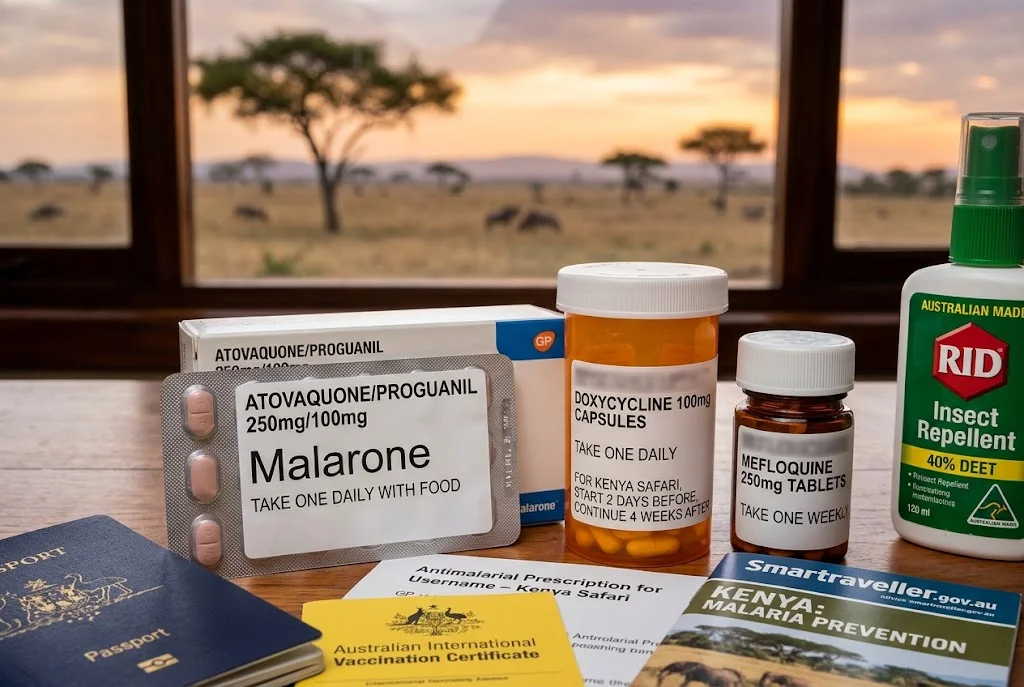
Anti-malarial medication is recommended for Australian travellers visiting almost all of Kenya's popular safari destinations. Kenya's major national parks and coastal areas are classified as high-risk malaria zones throughout the year. These high-risk areas include the Masai Mara, Amboseli, Tsavo, Samburu, Lake Nakuru, and Lake Naivasha.
Prophylaxis is also required if your itinerary includes a coastal stay in Diani or Watamu. Nairobi and high-altitude regions above 2,500 metres are the only areas with a low-to-negligible malaria risk. Medication is not typically required for a Nairobi stopover but becomes necessary upon entering the safari parks.
| Destination | Malaria Risk Level | Recommendation |
|---|---|---|
| Masai Mara National Reserve | High | Anti-malarial medication recommended |
| Amboseli National Park | High | Anti-malarial medication recommended |
| Tsavo East & West National Parks | High | Anti-malarial medication recommended |
| Samburu National Reserve | High | Anti-malarial medication recommended |
| Lake Nakuru & Lake Naivasha | High | Anti-malarial medication recommended |
| Diani, Watamu & Coastal Areas | High | Anti-malarial medication recommended |
| Nairobi | Low to None | Medication generally not required for Nairobi only |
| Mount Kenya (above 2,500m) | Low to None | Medication generally not required for high-altitude trekking |
Types of Malaria Tablets Available for Kenya
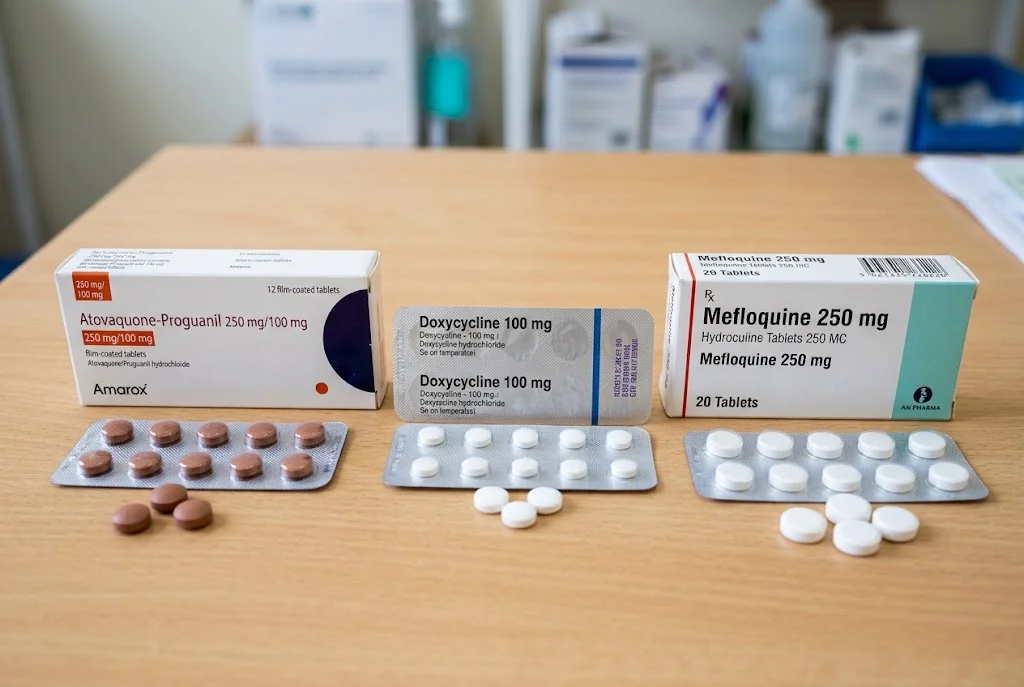
Australian doctors prescribe three main types of malaria tablets for travel to Kenya: Atovaquone-Proguanil, Doxycycline, and Mefloquine. These medications are a form of anti-malarial prophylaxis and require a prescription from a registered GP. Each medication works differently and has a distinct dosage schedule and side effect profile.
Your travel doctor will recommend the most suitable option based on your itinerary, medical history, and budget. The choice of medication directly impacts your pre-travel schedule and daily routine while on safari.
Atovaquone-Proguanil (e.g., Malarone)
Atovaquone-Proguanil is a popular anti-malarial for travellers because of its short course and general tolerability. The medication combines two drugs to prevent malaria infection. The dosage schedule requires you to start one or two days before entering a malaria zone, take it daily during your stay, and continue for seven days after leaving.
Common side effects may include nausea or headaches. Taking the tablet with food or milk often helps to minimise these effects.
Doxycycline
Doxycycline is a daily antibiotic that serves as a budget-friendly option for malaria prevention. The medication requires a longer course than other options. You must start taking the tablet one or two days before entering a risk area, continue daily during your trip, and for four weeks after you leave.
The main side effect of Doxycycline is photosensitivity, which increases your risk of severe sunburn. This side effect requires diligent use of high-SPF sunscreen, a hat, and protective clothing. The medication may also cause stomach upset, which can be reduced by taking it with food and water and remaining upright after swallowing.
Mefloquine (e.g., Lariam)
Mefloquine is a weekly tablet, a convenient dosage schedule that suits some travellers on longer trips. The course starts two to three weeks before travel, continues once a week during the trip, and for four weeks after leaving the malaria zone. Mefloquine is less commonly prescribed now due to potential mental health side effects.
These side effects can include anxiety, vivid dreams, or mood changes. The medication is not suitable for people with a history of depression, anxiety, or other psychiatric conditions. A detailed medical consultation is necessary to determine if Mefloquine is a safe option for your health profile.
How Australians Obtain Malaria Tablets for Kenya
Australians can only obtain malaria tablets with a prescription from a GP or a specialised travel doctor. Anti-malarial medications are 'Prescription Only' and cannot be purchased over the counter in Australia. This process requires planning several weeks before your trip.
Your first step is to book an appointment with a GP or travel clinic 4 to 6 weeks before your departure date. This timeframe allows for a full consultation and ensures any required vaccinations, like yellow fever, have time to become effective.
You should bring your detailed safari itinerary to the medical appointment. The doctor uses this information to provide accurate advice and discuss the benefits and risks of each medication. The doctor will then write a prescription, which you can fill at any Australian pharmacy.
Malaria Tablets for Specific Traveller Groups
Children, pregnant women, and seniors require special consideration when choosing malaria tablets. Medication choices for these groups can be more limited, and the risk assessment must be highly detailed. A doctor is the only person qualified to provide medical advice for these travellers.
Dosage for children is calculated based on their body weight, and some tablets can be crushed for easier administration. Travel to malaria-risk areas is generally not recommended for pregnant women; however, a GP can advise on the safest options if travel is necessary. Seniors and travellers with pre-existing conditions must discuss potential drug interactions with their doctor.
Effective Mosquito Bite Prevention on Safari
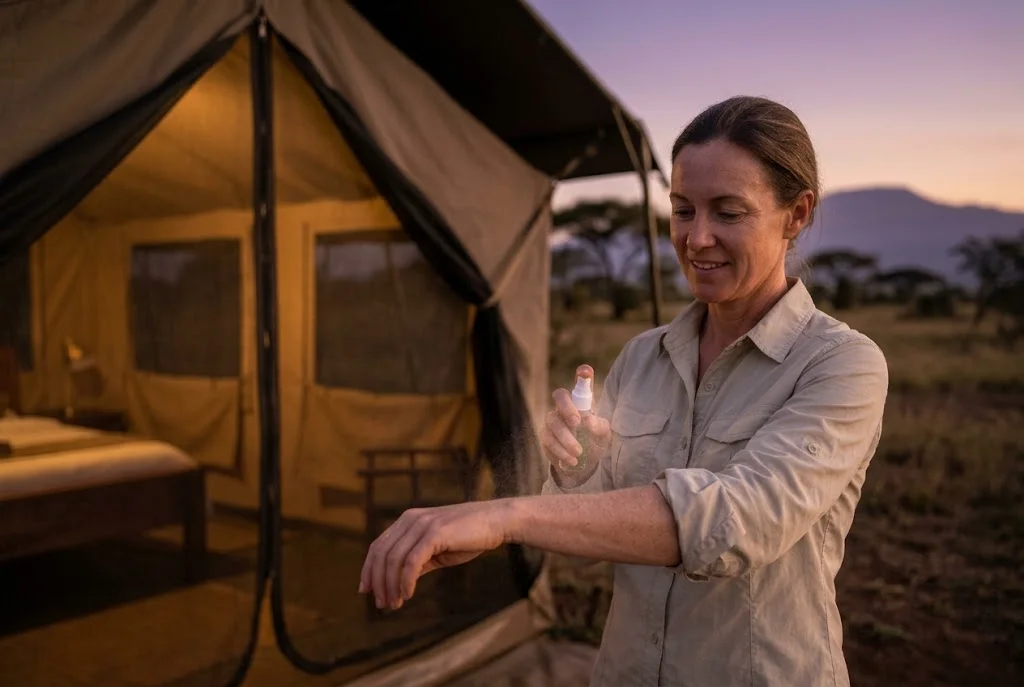
Effective malaria prevention combines anti-malarial tablets with measures to avoid mosquito bites. The mosquitoes that transmit malaria are most active between dusk and dawn. Personal protection during these hours is an important part of staying safe on safari.
Evening Wear and Repellents
As the sun sets, change into long-sleeved shirts, long trousers, and socks in neutral, light colours like khaki or stone. Apply an insect repellent containing DEET or Picaridin to all exposed skin. Australian government sources like Healthdirect recommend using a repellent and following the product's application instructions. Apply the repellent after your sunscreen has absorbed.
Nets and Insect-Proof Tents
Reputable safari lodges in Kenya's malaria zones provide mosquito nets over the beds, many of which are treated with insecticide. Before sleeping, ensure the net is tucked securely under the mattress with no gaps. Keep tent or room doors and windows closed in the evening, as most quality safari tents have built-in insect-proof mesh screens.
Considering Recent Weather Patterns (2026)
Kenya experienced El Niño-driven rains in late 2025 and early 2026. This rainfall pattern can increase standing water, creating more breeding grounds for mosquitoes. Safari operators maintain excellent mosquito control, but for the 2026 season, travellers should be extra diligent with personal bite prevention.
How to Check Your Safari Lodge's Mosquito Protection
You can improve your malaria prevention by confirming the amenities at your chosen lodges. Quality safari partners prioritise guest safety, but specific features can vary. Before travelling, you should check directly with the lodge about their mosquito protection measures.
Important features to confirm include air conditioning, window screens, and the condition of bed nets. This information helps you tailor your packing. A more rustic camp might prompt you to pack a travel-sized surface insect spray for your room as an extra precaution.
What are Malaria Symptoms and Post-Safari Actions?
You should be aware of malaria symptoms because prophylactic medication is not 100% effective. The symptoms often resemble the flu and include fever, chills, headaches, muscle aches, and fatigue. These signs can appear as early as seven days after a bite or months after you return to Australia.
You must see a doctor immediately if you develop a fever or flu-like symptoms after your trip. Tell your doctor that you have recently travelled in a malaria-risk area like Kenya safari zones. This information is necessary for an accurate diagnosis, which a simple blood test can confirm.
What is the Cost of Malaria Tablets in Australia for 2026?
The cost of malaria tablets for a two-week Kenya safari ranges from approximately $20 to $70 AUD. Travel medications are not subsidised by the Pharmaceutical Benefits Scheme (PBS), meaning you pay the full private price. The final cost depends on the medication type, brand, and pharmacy.
A 2026 cost guide for a full course is as follows:
- Atovaquone-Proguanil (e.g., Malarone): Generic versions typically cost between $40 and $70.
- Doxycycline: This is the least expensive option, often costing between $20 and $40.
- Mefloquine: The cost is usually between $50 and $70.
These prices are estimates. Your pharmacist can provide an exact price for your prescription. You should also factor the GP consultation fee into your total travel health budget.
Pre-Safari Medical Checklist for Kenya
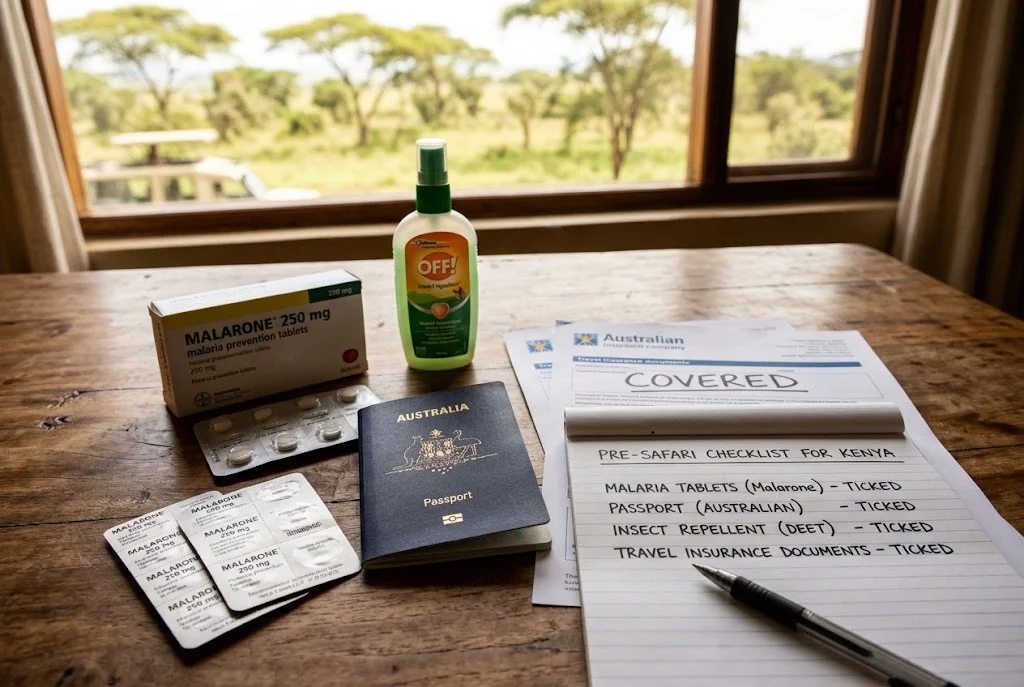
This medical checklist helps you organise your health preparations for a Kenya safari. The steps cover doctor consultations, prescriptions, and packing for health and safety.
- 4-6 Weeks Before Travel: Book an appointment with your GP or a travel medicine clinic.
- At Your Appointment: Take your full safari itinerary. Discuss malaria prevention and decide on the best medication. Review all routine and travel-specific vaccinations.
- Fill Your Prescription: Visit a pharmacy to get your malaria tablets, allowing time for the pharmacy to order stock if needed.
- Pack Smart: Pack your medication in your carry-on luggage. Include an effective insect repellent (with DEET or Picaridin) and long-sleeved clothing for evenings.
- Check Insurance: Ensure your travel insurance policy provides full medical coverage for travel in Kenya.