Smartraveller sets the Kenya travel advice for Australians at 'Exercise a high degree of caution' overall. Stricter advice levels apply to a few border and coastal areas, but none of Kenya's main safari parks sits inside a 'Do Not Travel' zone. This guide explains each Smartraveller level, details which areas fall under stricter warnings, and maps where Kenya's popular safari parks are located in relation to these official zones. The guide also explains the travel insurance implications for Australian travellers.
Official advice can change. Always check the live Smartraveller website for the most current information before booking and travelling.
How Does Smartraveller Classify Kenya for Australian Travellers?
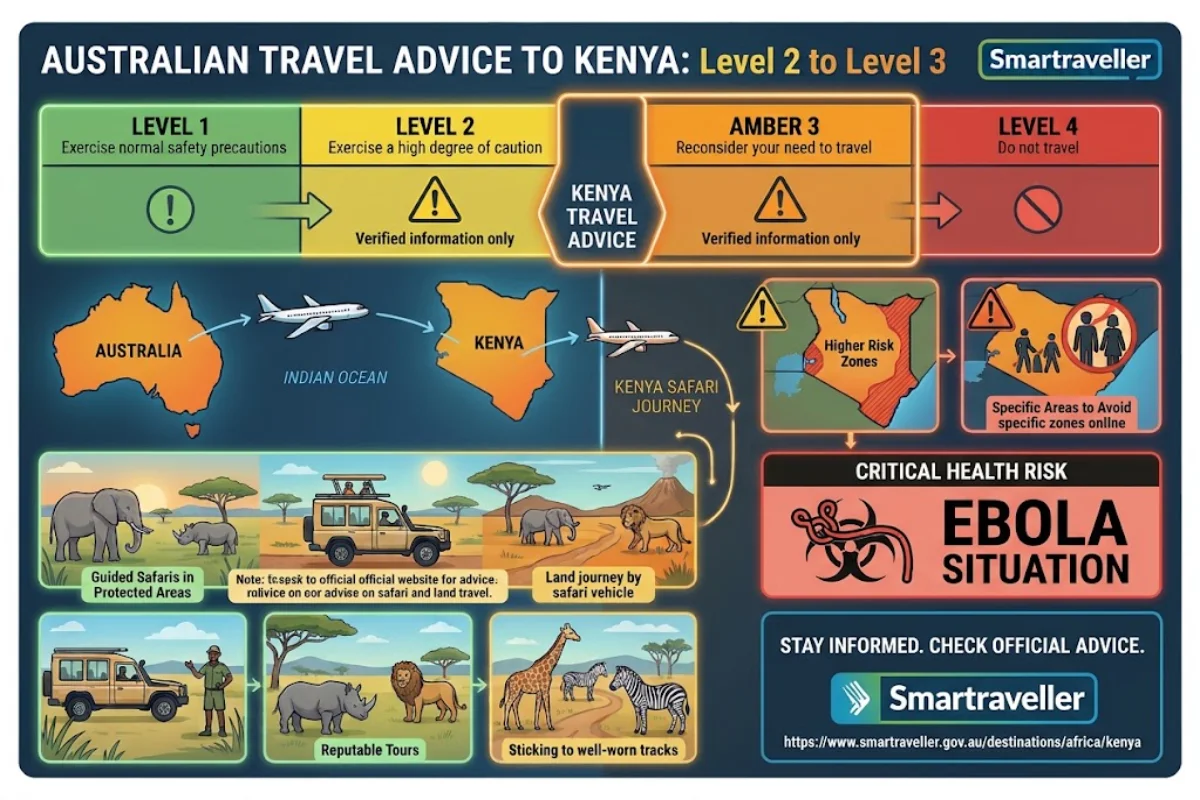
The Australian Government's official advice for the majority of Kenya is 'Exercise a high degree of caution'. This Level 2 advice covers Nairobi and the main safari circuits. Smartraveller's Level 2 rating indicates that there are more serious and frequent security risks than you would find in Australia. The advice acknowledges the potential for terrorism, violent crime, and civil unrest.
This advice level requires you to pay close attention to your personal security, monitor media for new risks, and take official warnings seriously. The advice level is a signal to be vigilant, rather than a recommendation to avoid travel. Within Kenya, specific regions have higher advice levels, escalating to 'Reconsider your need to travel' and 'Do not travel'. Understanding these specific zones is a key part of planning a safe itinerary and ensuring your safari safety.
Kenya's Specific 'Do Not Travel' and 'Reconsider Your Need to Travel' Zones
Smartraveller designates two higher levels of advice for specific parts of Kenya. These designations have major implications for your safety, insurance, and access to consular assistance. You must check the live Smartraveller page for the most current advice before travelling, as these boundaries can change.
'Do Not Travel' (Level 4)
A 'Do Not Travel' warning is the highest advice level. Travelling to a Level 4 zone will almost certainly invalidate standard Australian travel insurance. The warning also severely limits the consular assistance the Australian Government can provide. The government advises not to travel to:
- Areas within 100km of the Kenya-Somalia border in Mandera, Wajir, and Garissa counties due to the extreme risk of terrorism and kidnapping.
'Reconsider your need to travel' (Level 3)
The 'Reconsider your need to travel' level indicates serious risks exist. Entering Level 3 zones against official advice is likely to void your travel insurance for any incident that occurs there. You must confirm any exceptions with your insurer in writing. This level applies to:
- Lamu County, which is the mainland county adjacent to the popular tourist destination of Lamu Island.
- Tana River County, inland from the coast.
- Kilifi County, specifically the area north of the Galana-Sabaki River.
The advice for these coastal regions reflects a persistent threat of terrorism. Always consult the detailed map on the official Smartraveller site to understand the geographical boundaries of these warnings before finalising plans.
Kenya Safari Parks & Beaches Mapped Against Kenya Travel Advice Levels
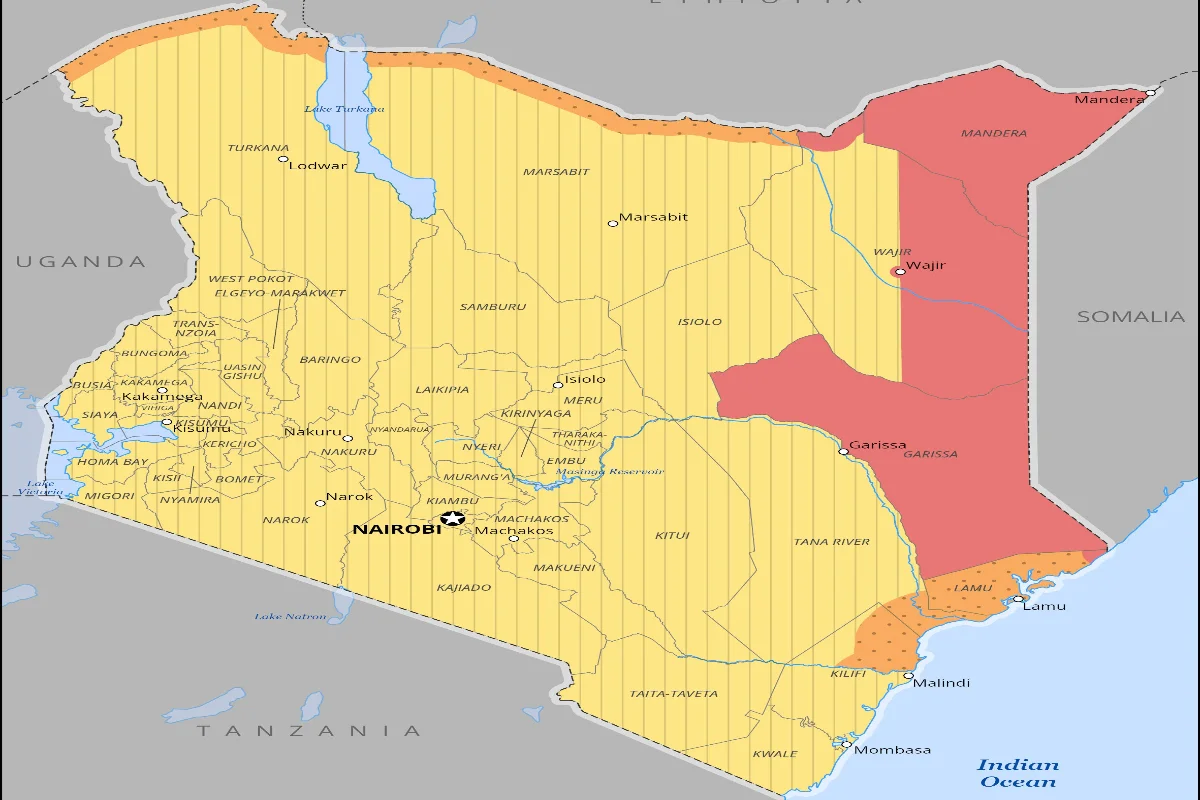
Australian travellers need to know where Kenya's safari parks sit in relation to official travel warnings. All of Kenya's premier safari parks and the most popular southern beaches are located within the 'Exercise a high degree of caution' zone. This table provides a clear breakdown of each location against the official advice and what that advice typically means for your insurance.
| Destination | Smartraveller Advice Level | Typical Insurance Implication for Australians |
|---|---|---|
| Masai Mara National Reserve | Exercise a high degree of caution | Your policy should be valid, but check your PDS for specific exclusions like civil unrest. |
| Amboseli National Park | Exercise a high degree of caution | Standard coverage generally applies. Always inform your insurer of your destination. |
| Tsavo National Parks | Exercise a high degree of caution | Your policy should be valid. These parks are far from the higher-risk northern zones. |
| Lake Nakuru & Naivasha | Exercise a high degree of caution | Standard coverage generally applies. |
| Samburu National Reserve | Exercise a high degree of caution | Your policy should be valid, but read the specific notes on this region below. |
| Ol Pejeta Conservancy | Exercise a high degree of caution | Your policy should be valid, but read the specific notes on this region below. |
| Meru National Park | Exercise a high degree of caution | Standard coverage generally applies. |
| Diani Beach | Exercise a high degree of caution | Your policy should be valid. Diani is on the south coast, well away from advisory zones. |
| Malindi & Watamu | Exercise a high degree of caution | Your policy should be valid. Both towns are south of the Galana-Sabaki River, placing them outside the 'Reconsider' zone. Link to our Watamu guide. |
| Lamu Island & Archipelago | Reconsider your need to travel | Entering this zone may void your travel insurance policy. Check directly with your provider before booking. |
How Smartraveller Advice Affect Australian Travel Insurance for Kenya
Smartraveller advice levels directly affect Australian travel insurance policies. Insurers base their risk assessments on this official advice, and clauses in your Product Disclosure Statement (PDS) will almost certainly reference government warnings.
- Level 2: 'Exercise a high degree of caution'. For most standard policies, you are typically covered when travelling in these areas. It is your responsibility to read the PDS for specific exclusions related to terrorism or civil unrest.
- Level 3: 'Reconsider your need to travel'. Travelling to a Level 3 area can be grounds for your insurer to deny any claim arising from your time in that region. Some specialist insurers may offer coverage, but you must arrange this in advance and get confirmation in writing.
- Level 4: 'Do not travel'. Entering a 'Do not travel' zone will almost certainly void your travel insurance policy completely. It is extremely unlikely that a standard policy will cover you for any event in a Level 4 area.
Travellers must check their PDS and, if in any doubt, call their insurer to clarify how the policy applies to the specific Kenyan counties they plan to visit.
How Safari Operators Manage Safety in Northern Kenya
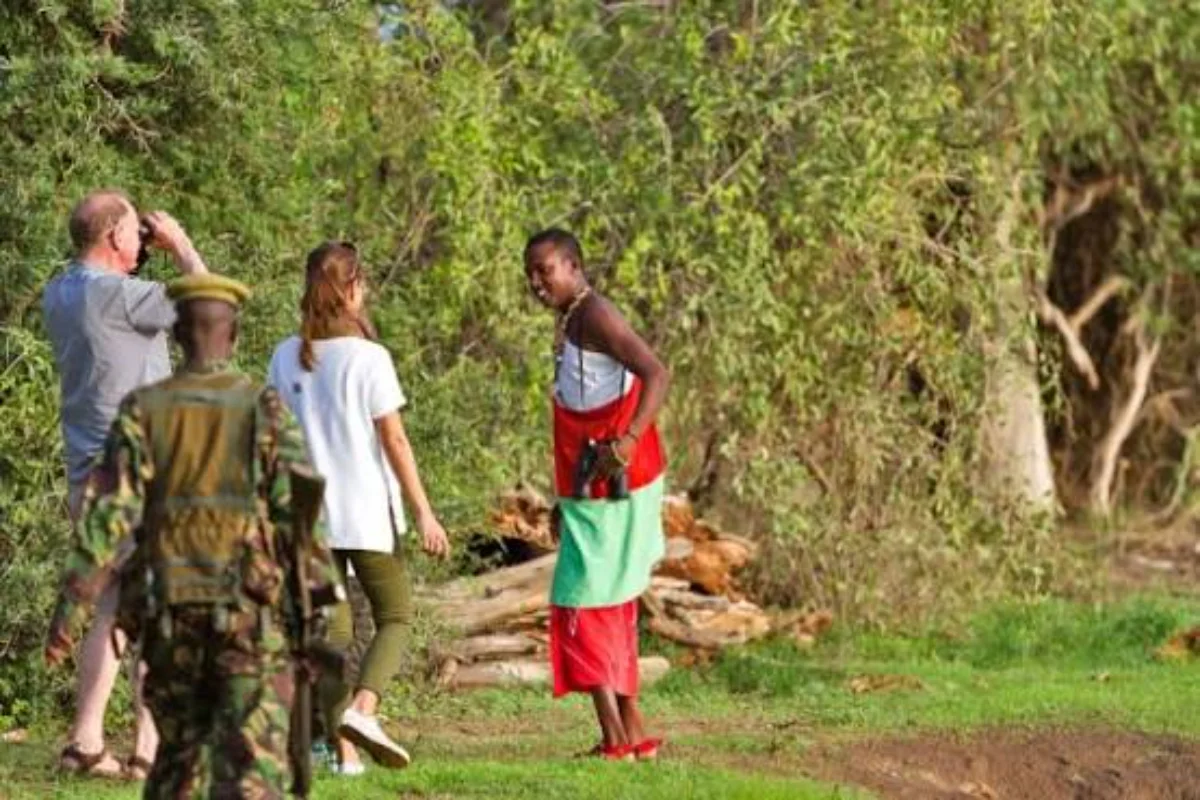
Smartraveller sometimes includes specific notes about security incidents like banditry in northern and central Rift Valley counties, which include Samburu and Laikipia. These warnings reflect real issues in remote parts of these vast counties.
Established safari operations in these regions function within highly organised security frameworks. Tourist activities in destinations like Samburu National Reserve and the private conservancies of Laikipia are managed with detailed safety protocols. These protocols often include:
- Private Conservancy Rangers: Many properties are on private conservancies with their own well-trained ranger forces that work closely with the Kenya Wildlife Service (KWS).
- Fly-in Access: Most travellers fly directly into private airstrips, bypassing long road journeys through sparsely populated areas.
- Controlled Environments: Lodges and camps are managed with dedicated security protocols, and staff have deep local knowledge and maintain communication networks to monitor the area.
Your safari operator continuously assesses the on-ground situation and plans routes based on the latest intelligence. A professionally organised safari operates within a managed environment designed to mitigate these regional risks. You can read more about KWS ranger protocols here.
General Health and Safety Advisories for Kenya
Smartraveller provides health and general safety advice beyond its regional security warnings. A key requirement is proof of yellow fever vaccination if you are travelling from a country with a risk of yellow fever transmission. Your journey to Kenya requiring a stopover in a listed country means you will need the certificate, even though Australia is not on the list.
Malaria is a risk in many parts of Kenya, and you should consult your doctor about preventative medication. Standard advice on drinking bottled water and ensuring food is well-cooked applies. Smartraveller also occasionally issues updates regarding other health concerns, so always check the 'Health' section of the advice page before you depart.
In major cities like Nairobi, the advice is to be vigilant about crime like pickpocketing and carjacking. Protests can occur with little warning. The standard advice is to avoid all demonstrations, as they can become violent, and to monitor local media for updates on planned events.
How Can Australians Stay Informed with Smartraveller?
Subscribing to updates and registering travel plans with Smartraveller is the most effective way for Australians to stay informed about changing conditions in Kenya. Before you book and again before you fly, check the Smartraveller website for the latest advice for Kenya.
We recommend you take two simple steps:
- Subscribe to updates: On the Kenya page, you can subscribe to receive email notifications whenever the advice is changed.
- Register your travel: Registering your trip details with DFAT allows the government to contact you in an emergency.
What Are the Essential Preparations for a Kenya Safari?
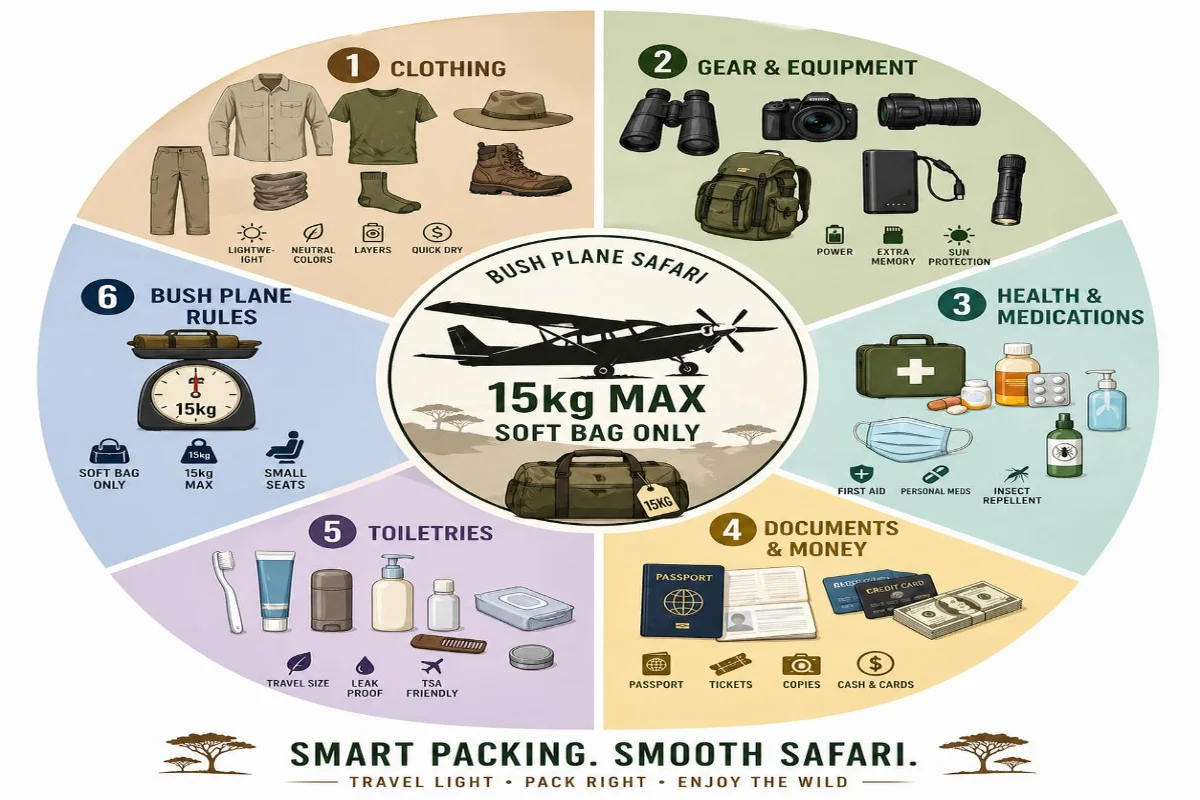
Final preparations for a Kenya Safari require a methodical approach based on official advice. Before you leave Australia, ensure you have completed the following tasks:
- Confirm Insurance: Read your travel insurance PDS carefully. Confirm with your provider in writing that your policy is valid for all regions on your itinerary.
- Organise Health Needs: Visit your GP at least six weeks before your trip to discuss vaccinations and malaria prophylaxis.
- Check Passports & Visas: Ensure your passport has at least six months' validity from your planned departure date from Kenya and contains at least two blank pages. Check the latest visa requirements for Australian citizens.
- Secure Documents: Make digital and physical copies of your passport, visa, insurance policy, and flight details. Leave one copy with family at home.
A reputable safari planner will design every route around the latest official advice. Ask us about your itinerary.
Emergency Contacts for Australians in Kenya
Save these contacts to your phone and keep a physical copy with your travel documents. In an emergency, these numbers provide direct access to both local Kenyan services and Australian consular support.
For consular assistance for Australian citizens, contact the Australian High Commission in Nairobi.
Australian High Commission, Nairobi
Limuru Road, Rosslyn
Phone: +254 20 427 7100
For 24-hour emergency consular assistance, contact the Consular Emergency Centre in Canberra.
Consular Emergency Centre (24 hours)
Phone: +61 2 6261 3305
For local emergencies in Kenya, use the following numbers.
Police, Ambulance, Fire: 999
Kenya Smartraveller Advice Levels at a Glance for Australians
| Advice Level | Description | Primary Australian Insurance Implication |
|---|---|---|
| Level 2 | Exercise a high degree of caution | Policy is generally valid. |
| Level 3 | Reconsider your need to travel | Policy is likely void. |
| Level 4 | Do not travel | Policy is almost certainly void. |
Frequently Asked Questions
What level is Kenya on Smartraveller?
The overall advice level for Kenya for Australians is Level 2: 'Exercise a high degree of caution'. Specific border and coastal regions are at Level 3 ('Reconsider your need to travel') and Level 4 ('Do not travel').
Does travel insurance cover Kenya for Australians?
Yes, standard travel insurance policies generally cover travel to the majority of Kenya that is under Level 2 advice. This area includes all major safari destinations like the Masai Mara and Amboseli. Your policy will likely be void if you travel to areas designated as Level 3 or Level 4.
What areas of Kenya should Australians avoid?
Based on current Smartraveller advice, Australians should not travel to areas within 100km of the Kenya-Somalia border. You should also reconsider your need to travel to Lamu County and parts of Tana River and Kilifi counties north of the Galana-Sabaki River.
Is Samburu safe to visit?
Samburu National Reserve is in a region where Smartraveller notes risks of banditry. Organised safaris to the reserve, however, operate within a framework designed for traveller security. Travellers typically fly in, stay at secure lodges, and all activities are guided by professionals with extensive local knowledge and security support.
Is Lamu safe for Australians?
Smartraveller advises Australians to 'Reconsider your need to travel' to Lamu County due to the risk of terrorism. The official advice reflects a heightened and serious risk level. Travelling to Lamu County may invalidate your insurance.
Are safari lodges a terrorism target?
Smartraveller states that terrorists have targeted places frequented by foreigners across Kenya. Safari lodges, particularly those inside national parks and conservancies, have security measures, including trained rangers and controlled access points, to mitigate this general threat.
Who do I call in an emergency in Kenya?
For local police, fire, or ambulance, dial 999. For 24/7 consular assistance for Australian citizens, call the Consular Emergency Centre in Canberra on +61 2 6261 3305 or contact the Australian High Commission in Nairobi during business hours.