Choosing between a Kenya vs South Africa safari comes down to what you want most from the trip, and for most Australians, Kenya is the stronger pick. It’s the home of the Great Migration, when more than 1.5 million wildebeest, zebra and gazelle cross the Masai Mara river between July and October. Its expert-guided game drives, private conservancies and dawn balloon flights add to a classic safari experience.
South Africa’s main advantage is the nonstop Perth to Johannesburg flight, which takes about 11 hours compared with 18 to 20 hours to Nairobi with one connection. Costs are similar in Australian dollars, though Kruger’s self-drive option can keep a safari cheaper.
This analysis compares flight times, safari costs, wildlife, guided and self-drive safaris, and which trip suits first-timers, families, honeymooners, photographers and seniors. It also covers Kenya’s ETA, South Africa’s visa-free entry, malaria and Yellow Fever rules, how to combine both countries, and how to plan ahead.
Comparing Flight Times and Routes from Australia
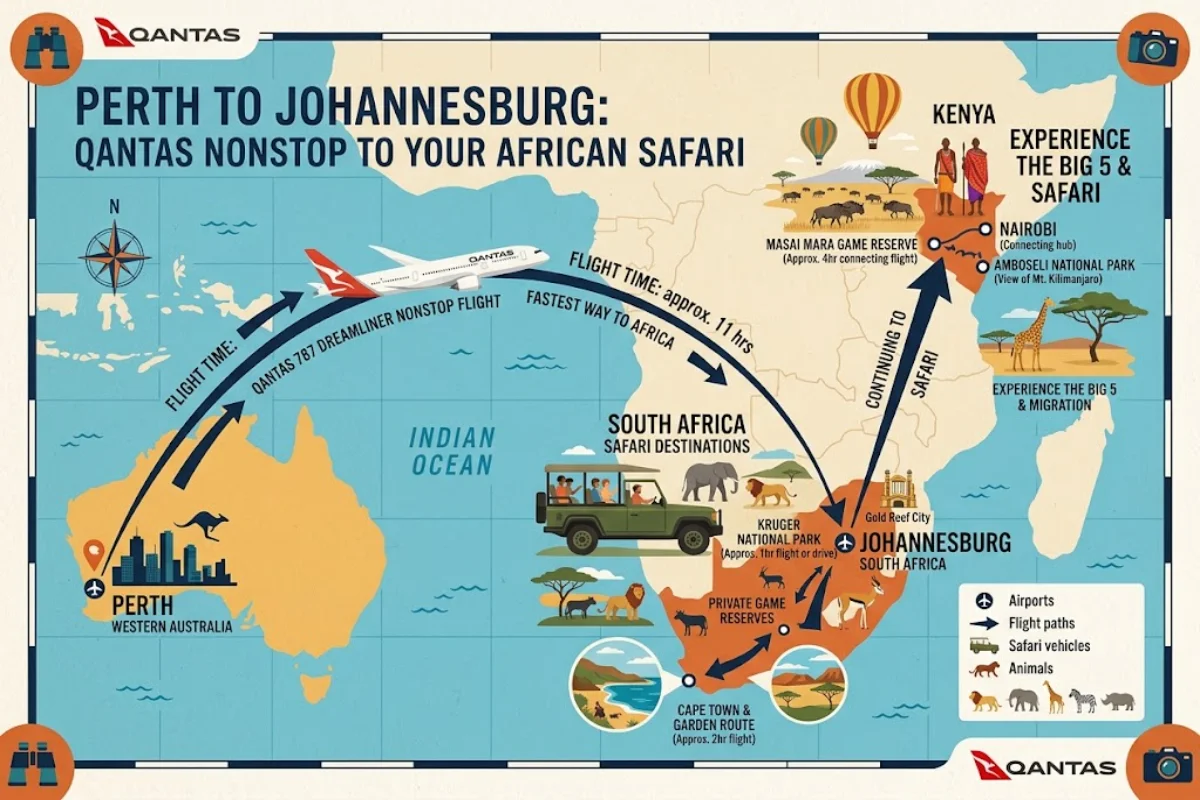
The flight schedule presents Australians with a logistical trade-off between Kenya and South Africa. The choice is between a nonstop flight to South Africa or a single-connection flight to Kenya. The traveller's departure city in Australia determines the total travel time.
From Perth: The Nonstop Advantage
South Africa offers Western Australians the fastest route to Africa. The Qantas (QF65) nonstop flight from Perth to Johannesburg takes approximately 11 hours and operates three times a week.
Reaching Kenya from Perth requires a one-stop flight through a hub like Dubai with Emirates or Doha with Qatar Airways. Total travel time to Kenya from Perth averages 18 to 20 hours, including the layover.
From Sydney and Other East Coast Cities
East Coast Australian travellers face a less distinct time difference between Kenya and South Africa. Qantas operates a direct Sydney to Johannesburg flight (QF63) with a journey time of around 14.5 hours.
One-stop flights to Johannesburg from the East Coast via hubs like Dubai or Doha provide scheduling flexibility. These routes have similar travel times to the one-stop routes to Kenya.
A flight to Nairobi from Sydney or Melbourne requires a single connection and takes between 20 and 22 hours. The total travel time difference between the two safari destinations is smaller for East Coast departures compared to Perth.
What are the Safari Costs in AUD for Kenya vs South Africa?
| Cost Component | Kenya (estimates in AUD) | South Africa (estimates in AUD) |
|---|---|---|
| Return Flights (Economy) | A$2,200 – $3,200 from Sydney/Perth | A$2,000 – $3,000 from Sydney/Perth |
| Daily Park/Conservation Fees | Masai Mara: ~A$300 (peak season) / ~A$150 (low season) per person, per day. | Kruger NP: ~A$50 per international adult, per day. |
| Mid-Range Safari (per person/day) | A$800 – $1,200 (fully inclusive guided safari with lodge/camp accommodation). | A$700 – $1,100 (fully inclusive guided safari). Self-drive options are cheaper. |
| Luxury Safari (per person/day) | A$1,500+ (premium camps in private conservancies, fly-in access). | A$1,400+ (luxury lodges in private reserves like Sabi Sand). |
| Internal Flights | e.g., Nairobi to Masai Mara: ~A$300–$400 one-way. | e.g., Johannesburg to Skukuza (Kruger): ~A$250–$350 one-way. |
| Guided Game Drives | Included in most safari packages. | Included in private reserve stays; an add-on or self-drive in National Parks. |
How Do Wildlife Experiences Compare: The Great Migration vs Kruger?
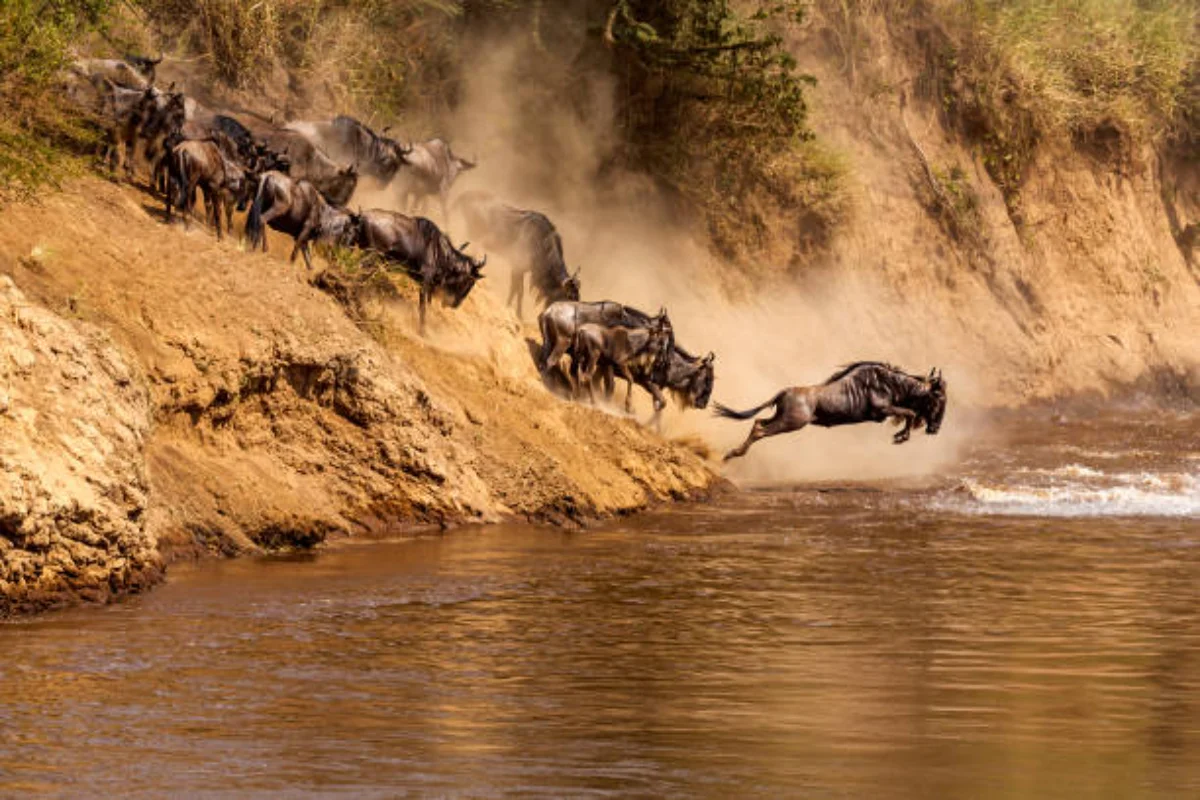
Kenya and South Africa provide different wildlife experiences and landscapes despite both offering Big Five sightings. Kenya features vast, unfenced plains, whereas South Africa has high wildlife density in more structured parks and reserves.
Kenya hosts the Great Wildebeest Migration in the Masai Mara National Reserve from approximately July to October. The migration comprises over 1.5 million wildebeest, zebra, and gazelle and includes frequent predator interactions and river crossings.
Beyond the migration, Kenya offers cultural interactions with the Maasai community. The country’s private conservancies, which border the national parks, permit activities like night drives and walking safaris that are restricted in the main reserves.
South Africa's primary wildlife area is the Kruger National Park. Kruger provides reliable Big Five viewing, with frequent leopard sightings in the adjacent Sabi Sand Game Reserve.
The safari experience in South Africa is varied. Travellers can self-drive on sealed roads within the national park or stay at a luxury lodge in a private reserve for guided, off-road game drives.
Kruger's dense bushveld habitat offers a different wildlife viewing dynamic than the open plains found in Kenya.
Health and Visa Requirements for Australians
Australians must plan for health and entry requirements for both Kenya and South Africa. Both destinations have malaria-risk zones, including the Masai Mara and the Kruger National Park, which require anti-malarial medication.
A travel doctor consultation 6-8 weeks before departure is recommended for advice on prophylaxis and routine vaccinations. South Africa offers an advantage with high-quality, malaria-free safari reserves, such as Madikwe and parks in the Eastern Cape.
A Yellow Fever vaccination certificate is not required for direct entry from Australia into either Kenya or South Africa. Smartraveller provides the latest official health advice for Australian citizens.
What is the Difference Between Guided and Self-Drive Safaris?
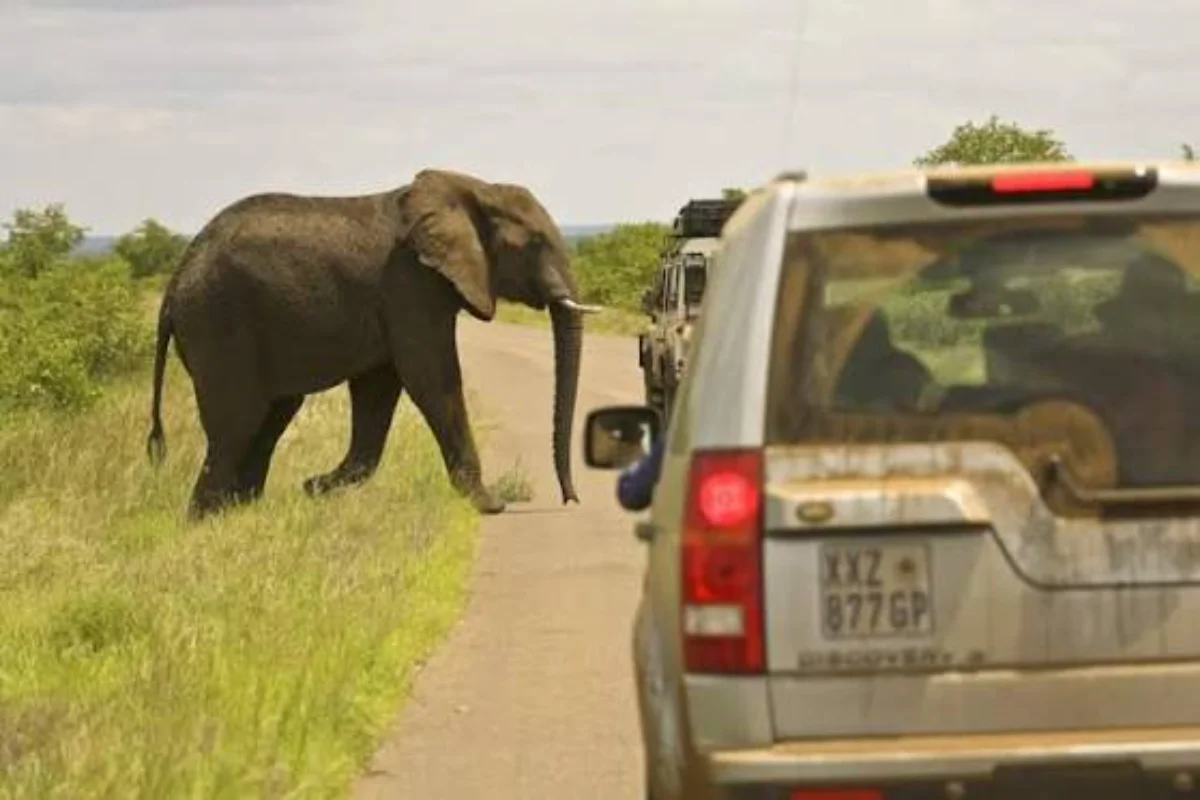
Kenya's safari model is based almost exclusively on guided 4x4 vehicles with expert driver-guides. This model is effective in the large, unfenced Masai Mara ecosystem, where local knowledge is needed to track wildlife and navigate.
The guided approach allows travellers to focus on photography and observation while a professional manages navigation and logistics. This structure defines the typical Kenyan safari.
South Africa's Kruger National Park is Africa's main self-drive safari destination. The park has a network of sealed and gravel roads, clear signage, and public rest camps with accommodation.
Self-driving provides flexibility and can be a more budget-friendly option than a guided safari. Self-drivers are responsible for their own wildlife sightings and must follow park rules, including staying on designated roads.
Private game reserves that border Kruger provide a guided experience comparable to Kenya's model. These reserves permit off-road driving and include the services of expert trackers.
How to Combine a Kenya and South Africa Safari
Combining a safari in Kenya and South Africa requires careful planning around Yellow Fever regulations. South Africa requires travellers arriving from Kenya to have a valid Yellow Fever vaccination certificate.
To avoid this vaccination requirement, Australian travellers must visit South Africa first. The recommended itinerary is Australia to Johannesburg, followed by a flight from Johannesburg (JNB) to Nairobi (NBO).
No Yellow Fever certificate is required for entry into Kenya when arriving from South Africa, which is not a designated risk country. This travel order is the most efficient from a health logistics perspective.
What are the Entry Requirements: Kenya ETA vs South Africa Visa?
Pre-travel administration for Australian passport holders differs between Kenya and South Africa. South Africa provides visa-free entry for tourist stays up to 90 days, with a stamp issued on arrival.
Kenya requires all Australian citizens to obtain an Electronic Travel Authorisation (ETA) before travel. The mandatory online application requires passport details, flight itinerary, accommodation proof, and a passport-style photo.
The Kenyan ETA process includes a non-refundable fee of approximately US$35 and requires proof of valid travel insurance. This pre-travel authorisation is an administrative step not required for South Africa.
Which Safari Suits Different Australian Travellers?
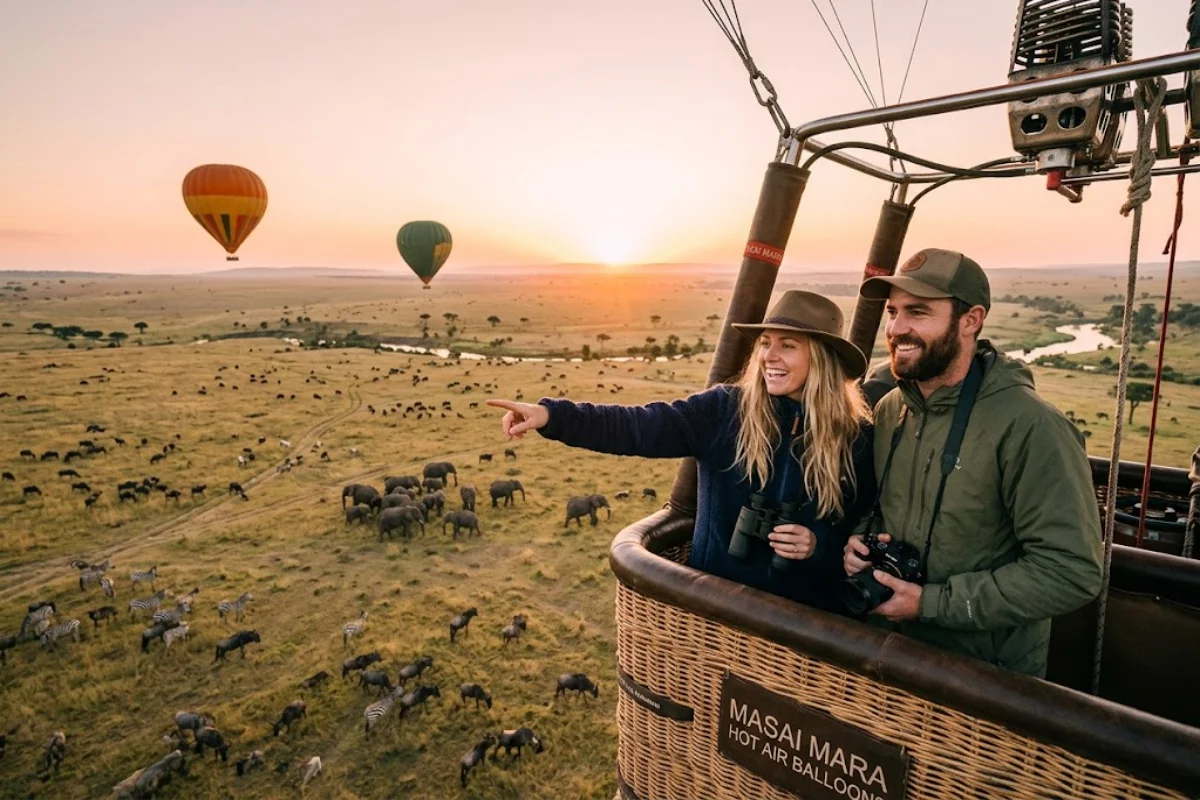
The ideal safari destination depends on the traveller's budget, travel style, and specific interests. Kenya and South Africa offer different advantages for certain types of Australian travellers.
- First-Timers: South Africa can be a more gentle introduction. The developed infrastructure, ease of self-driving in Kruger, and the availability of malaria-free parks make the country very accessible.
- Families: South Africa is often preferred due to its malaria-free reserves and the variety of activities in areas like Cape Town and the Garden Route, which can be combined with a safari.
- Honeymooners: Kenya offers a classic safari experience with tented camps on the Mara plains, sundowners overlooking the savannah, and dawn hot-air balloon flights.
- Self-Drivers: South Africa is the clear winner. The road network and accommodation range inside Kruger National Park make it the premier self-drive safari destination in Africa.
- Photographers: Both countries are excellent photographic destinations. Kenya provides large-scale, wide-angle landscapes with large herds during the migration. South Africa’s private reserves, with their off-roading permissions, allow for very close encounters with animals like leopards.
- Seniors: Both countries have high-end lodges with excellent comfort. South Africa's well-developed infrastructure and the shorter nonstop flight from Perth may give it an edge for travellers prioritising easy movement.
How to Plan a Safari from Australia
- Consult a Safari Specialist: An operator who understands logistics from Australia can help organise flight options, seasonality, and on-the-ground transfers.
- Check Smartraveller: Travellers should register their trip and review the latest government advice for the destination and any transit countries. Smartraveller is the primary source for safety and entry requirement updates.
- Book in Advance: For travel during peak seasons like the Great Migration (July–October) or school holidays, booking flights and accommodation 9-12 months ahead is recommended.
- Visit a Travel Doctor: An appointment should be scheduled 6-8 weeks before departure to discuss vaccinations, get prescriptions for anti-malarial medication, and receive personalised health advice.